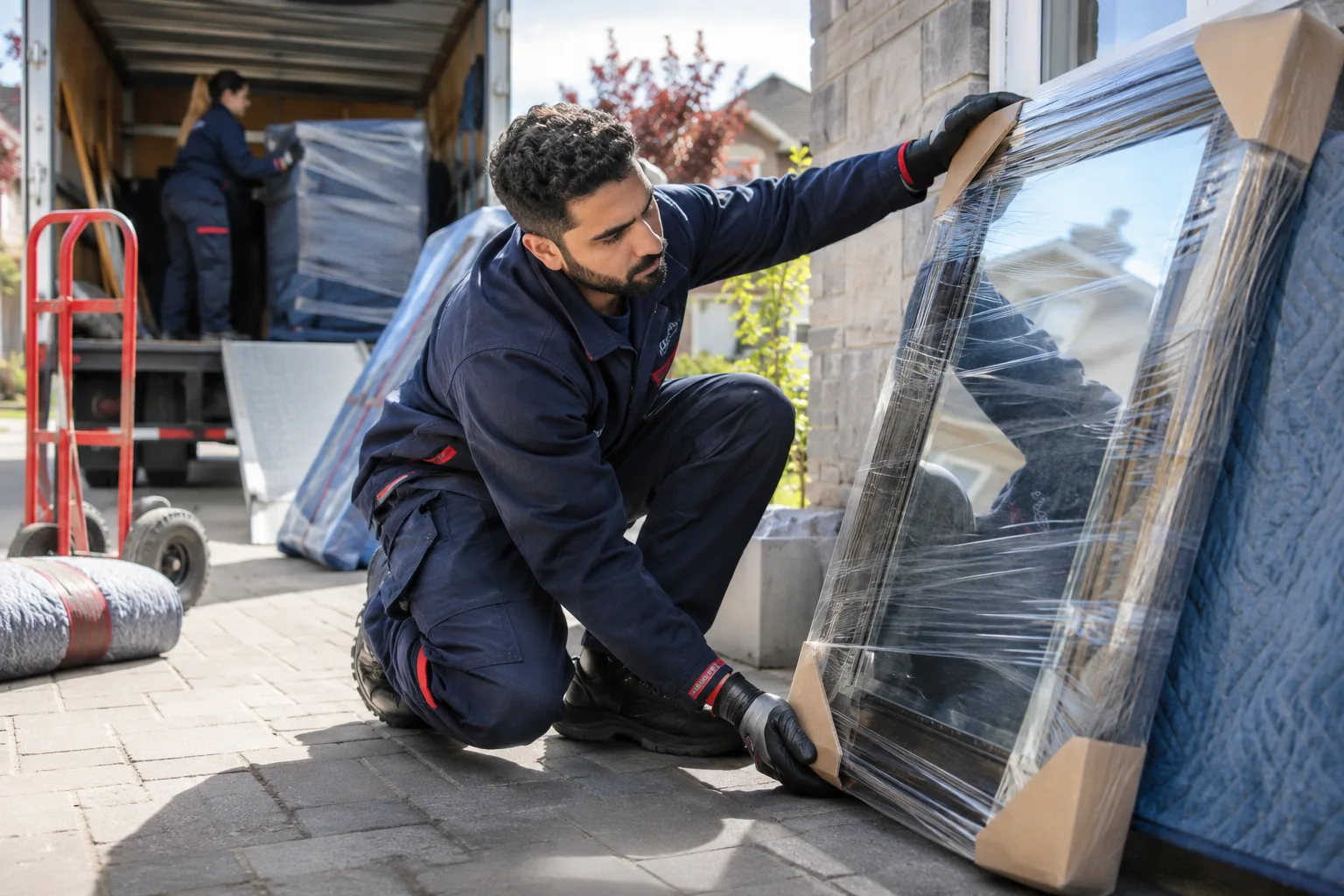
Start with the pieces that may control the job
Suppose most of your cartons can leave through the front door, but a large sectional, a treadmill, and a solid cabinet are on a lower level. Those three pieces may determine the handling method and crew required for the collection. Describe them before discussing the number of bedrooms. Explain where each item sits, how it reached that room, and whether it has changed since then. An item assembled downstairs may not leave as one piece. An old delivery photograph can help identify that history, but the mover still needs to assess the route now available.
Make a short furniture register rather than a long list of brand names. For each difficult piece, record approximate dimensions, removable parts, visible condition, and its intended destination room. Include an image showing the whole object and another showing the first turn or doorway it must pass. Ask the estimator what further measurements would make the assessment reliable. If you are unsure whether a leg, backrest, or handle can be removed, label that uncertainty. Do not dismantle a load-bearing component simply to make the dimensions appear more convenient in a quote request.
Keep ordinary household items in the inventory too. A specialist handling question does not replace the rest of the shipment description. The crew needs to know whether the stair route will be clear or whether it must first move cartons out of the way. Note furniture staying behind, especially if it resembles something on the moving list. The goal is to let a company describe a complete working sequence. A plan that deals with the awkward cabinet while ignoring everything around it can still fail at the doorway on collection morning.
Ask for an access assessment you can understand
Give the company a continuous account of the route from the room to the truck. Include the stair flight, any intermediate landing, the exit door, outside steps, and the closest practical stopping place. A collection described as one flight of stairs may hide a tight turn that matters more than the number of steps. Use a video walk-through if the estimator requests one, keeping the camera steady and allowing questions. Ask which parts can be assessed remotely and which uncertainties would justify a visit before the booking is accepted.
At the destination, repeat the exercise from the vehicle to each intended room. A sofa that can leave the old property may not fit the new landing. Ask the mover whether its estimate assumes final room placement or only delivery through the entrance. If you are considering a different position for a large piece, have that route assessed as well. It is easier to choose between two suitable rooms before the truck arrives than to ask a crew to improvise a method after unloading has begun.
Request a plain explanation of the proposed approach, including any dismantling and the people responsible for reassembly. You do not need to direct the technical handling. You do need to know what work the company is agreeing to provide and what must be prepared first. If it proposes an additional access method, obtain the scope and any property permissions it requires before deciding. Avoid interpreting silence as confirmation that a particularly difficult route has been accepted. Ask the estimator to identify what remains unresolved and who will close that question.
Compare crews through their working sequence
Ask each prospective mover how it would organize this particular collection. Would it deal with the lower-level furniture before loading the main rooms? What preparation would it expect from you? Which tasks require the same people to remain together? These questions reveal whether the quote has considered the property you described. They also make differences between crew proposals easier to understand. A larger crew is not automatically the right answer, and a smaller crew is not automatically cheaper when its work has to fit a constrained access appointment.
Discuss who supervises decisions at the property. You should know the lead person's role, how concerns reach the office, and who may agree to a change in scope. If someone other than the estimator attends, ask how the access notes and photographs reach that person. A reliable handover within the moving business matters because your careful description is useful only if the people doing the work receive it. Keep your own copy available, but do not assume the crew should discover the entire job from your phone when it arrives.
Compare the written offers against that sequence. Look for the included preparation, protective materials, dismantling, handling, transport, and room placement. Ask whether anything has been priced separately or left for another trade. If a company cannot include a particular task, decide who will perform it and when. For example, furniture preparation completed after the collection window starts may affect the crew's available time. Put the responsibility beside the relevant item in your register so the decision remains attached to the object rather than disappearing into a general email exchange.
Prepare the rooms without creating another obstacle
Clear the working route in the order agreed with the mover. Move light personal items away from the stairs and remove loose objects from landings. Keep essential household supplies separate so you do not need to cross the loading path repeatedly. If a door or rail is to be removed, agree beforehand who is authorized to do that work and how it will be reinstated. Do not assume that a moving appointment includes alterations to the property. Obtain the relevant owner's or manager's agreement where the property is not yours to change.
Pack room contents so the large items remain accessible. A wall of sealed cartons in front of a cabinet may force the crew to handle the same boxes twice. Ask where finished cartons should wait and label them for the destination room. Give fragile cartons a stable location away from the stair entrance. Keep the inventory visible to the person supervising the collection. If family members are helping, assign someone to answer ordinary household questions while the mover's lead deals with handling decisions. Several people giving different instructions can slow an otherwise clear plan.
Prepare a small issue sheet for matters discovered after the estimate. This might include a newly fitted handrail, a changed parking arrangement, or an item that can no longer be dismantled as expected. Send the information before moving day where possible. On the day, review only the unresolved changes during the opening walk-through. This keeps the conversation useful and allows the crew to confirm the conditions it actually sees. If the plan no longer fits, pause the affected task and use the agreed decision contact instead of pushing ahead because the truck is already present.
Connect the furniture plan to the estimate
Ask what the price assumes about the difficult items and their access. A quote should make clear whether the assessed handling is included in the main amount or treated as a separate service. If the company charges by time, find out how travel, preparation, minimum periods, and delays are recorded. If it offers another pricing structure, ask what changes would lead to a revised amount. Compare the assumptions attached to the figures. A low total based on an uncomplicated ground-floor collection does not describe the lower-level job you are actually booking.
Keep approved changes specific. If the treadmill will be sold and no longer requires handling, update that entry. If a cabinet is added, ask for its effect on the scope rather than assuming it can replace an unrelated item without consequence. Save the company's response alongside the current register. Before paying a deposit, check the business accepting the booking, the payment timetable, and the cancellation or rescheduling terms. These details help you understand the commitment you are making while the practical handling questions are still being resolved.
Leave room for work you arrange separately. Your budget may include dismantling by another professional, disposal of furniture that cannot travel, or temporary accommodation if property access changes. Keep those amounts outside the mover comparison unless the mover is actually supplying them. This distinction prevents an attractive moving quote from becoming a misleading whole-project budget. At the end, you should be able to explain the estimate through the inventory, the route, the agreed tasks, and the conditions at both properties without adding assumptions that were never discussed.
Make delivery a placement decision, not a second survey
Provide a simple room plan showing the final position of large pieces. Identify the entrance, any clear route that must remain open, and which items should be placed first. If the cabinet has to reach a back room before the sofa blocks the hallway, explain that preference during planning and let the crew assess the sequence. The destination layout should support unloading rather than require repeated changes once furniture is inside. Mark cartons using the same room names as the plan so the people carrying them do not need a new explanation at every doorway.
Have an authorized receiving person present who knows the agreed scope. That person should be able to identify the furniture, point out the assessed route, and contact you or the office when a decision is needed. Give them the relevant records without overwhelming them with every early draft of the move. Distinguish final instructions from ideas you considered and rejected. If the destination is different from the original plan, notify the mover before dispatch to the property. An inaccessible room is not resolved simply by adding an explanatory note to the delivery receipt.
Inspect accessible furniture and record any concern using its inventory description. Ask the company how the reporting process works and retain the delivery paperwork. Check that booked reassembly is complete before relying on an item in daily use. Keep small fittings with the associated furniture record so a missing component can be identified clearly. The closing conversation should concern the work actually performed and any specific follow-up. It should not require reconstructing which sofa, cabinet, or exercise machine the estimate referred to several weeks earlier.
Use the result to choose a mover with a clear scope
For a Lethbridge move of this kind, the strongest comparison is a set of written answers about the same furniture and the same route. Review whether each company understood the controlling items, identified uncertain access, described its responsibilities, and supplied terms you can follow. If one offer remains vague, ask the outstanding question before deciding. You are choosing a working arrangement as well as transport. The estimate should give the crew and the household a shared description of what will happen.
Keep the final register, access notes, room plan, and agreement together through collection and delivery. There is no need to create an elaborate project system. A clearly dated set of records, one decision contact, and accurate information about the two properties are often more useful than a large folder of unsorted screenshots. As the move approaches, update only the facts that changed and make sure the responsible people acknowledge them. This gives the booking a stable basis while still allowing the practical adjustments a household move may require.
A final review for a lower-level collection
Imagine that the access survey is complete and the mover has accepted the basement cabinet, but the household has not decided whether the sectional belongs downstairs at the destination. Treat that as an open delivery question, not a minor decorating choice. Measure the possible route, provide the relevant photographs, and ask the company whether the alternative placement changes its plan. If it cannot assess the new route before collection, choose an agreed temporary position that the company has actually accepted. Keep the uncertainty visible until someone has authority and enough information to resolve it.
Now consider a late change at pickup: a family member has stacked donation bags along the same stair landing needed for the cabinet. Those bags may not be part of the shipment, yet they still affect the work. Remove them before the opening walk-through and explain any obstacle that cannot be cleared. A mover cannot use the inventory to infer everything that will occupy the access path. This is why preparation should follow the assessed handling route, rather than only the list of belongings being carried.
Before the crew leaves the original home, check the areas associated with dismantled furniture. Look for fittings, removable shelves, brackets, and pieces set aside during preparation. Match them to the register without entering an active handling zone. At the destination, use the same references to close the work. These small decisions connect the estimate to the practical details that can otherwise become difficult to explain once a room is empty and the truck has moved on.