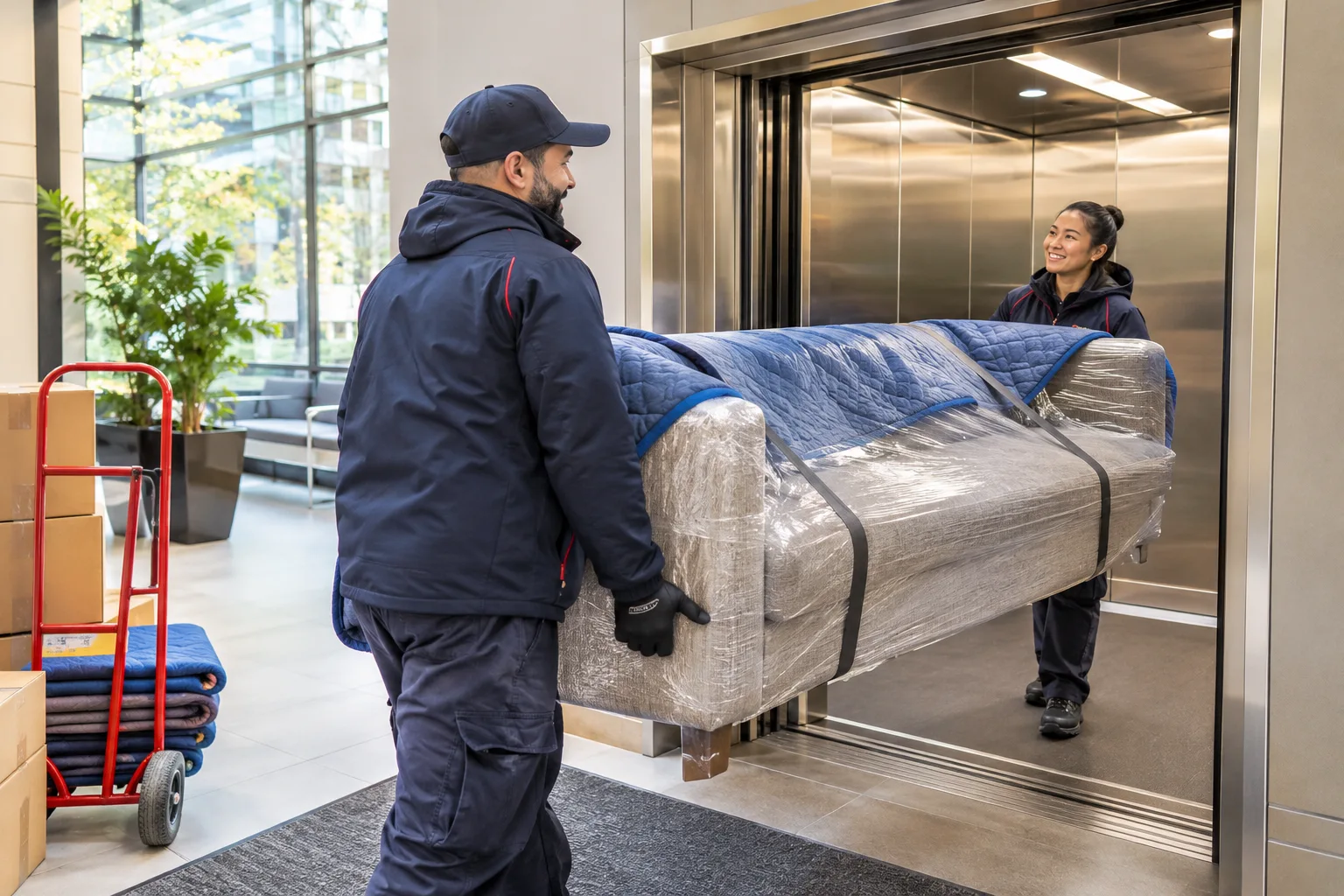
Collect building instructions before booking
Ask each building contact how moving access is arranged. Obtain the permitted hours, entrance instructions and any reservation process that applies to the property. Give the information to the mover before accepting the schedule. Avoid relying on a neighbour’s previous experience when the current appointment and access arrangements have not been confirmed.
A pickup building may offer one reservation window while the receiving building has a different appointment structure. Both need to be considered before the moving time is accepted. Speak with the appropriate contact at each building about the actual moving appointment. Obtain the available hours and entrance instructions, then distinguish confirmed details from requests still awaiting an answer. Give the mover the version it should use when planning the crew. Another resident's earlier experience may suggest a useful question but should not replace the current property's confirmation. If the two buildings offer windows that appear difficult to connect, raise that conflict before accepting the moving schedule. Keep the building records with the service booking so a household helper can explain the arrangements to the crew. The objective is a usable pair of access appointments, rather than separate confirmations that leave no practical way to collect and deliver the shipment within them.
Which building conditions are confirmed and which remain assumptions?
Describe the suite-to-vehicle route
Trace the path from the suite through corridors, doors, lifts or stairs to the loading point. Include a long internal carry or a change of entrance. Ask the estimator which details affect its assessment. A floor number alone does not describe the route or the way the crew will move through shared spaces.
Two suites on the same floor can have very different distances to the designated lift. Explain the actual route rather than assuming the floor level tells the full story. Walk the path between the suite and the proposed stopping point rather than describing the apartment only by its floor. Identify doors that need access control, changes of route and the distance through shared areas. Explain which lift or staircase is intended for the appointment and what the company still needs to assess. A photograph of the suite entrance does not describe the entire carry. If the receiving apartment has a different arrangement, prepare a separate route record for it. The estimator should be able to relate the proposed team and work to those two paths. When a route instruction changes, pass the change through the provider's responsible contact instead of expecting individual movers to reconcile several versions while loading.
What route will the crew use between the suite and the vehicle?
Coordinate the loading space
Confirm where the moving vehicle may stop and who controls that space. Explain height limits, loading-bay access or other physical restrictions that actually apply. Ask the mover whether the proposed vehicle can use the arrangement. Keep parking and building access questions connected so the crew has a practical route all the way from the vehicle to the suite.
A suitable elevator appointment may be ineffective if another vehicle occupies the loading point and no one has been assigned to resolve the access issue. Confirm the stopping arrangement with the party who controls the loading area, and provide the mover with the physical details it requests. Identify how the vehicle enters, which space is available and who can resolve a blocked or inaccessible point. A reserved lift does not ensure that a vehicle can reach a suitable position outside. Ask the moving company whether the proposed arrangement fits its vehicle, especially where an approach or clearance needs assessment. Avoid promising exclusive use of a shared space unless the relevant contact has confirmed it. The household's plan should explain the connection between street or bay access and the internal route, so the crew does not arrive with one useful reservation and another essential part left uncertain.
Who provides the usable stopping area when the truck arrives?
Match the shipment to the appointment
Give the mover the actual inventory and the confirmed appointment duration. Ask how the crew expects to complete the work and what happens if the available window changes. Include packing or preparation only where it has been booked. A reservation does not establish that the shipment can be handled within it without a realistic work assessment.
A customer may book a short lift window while requesting furniture dismantling and unfinished packing in the same appointment. Ask whether those tasks need a separate sequence. Put the shipment and the building appointment in the same conversation with the estimator. Include preparation that must happen before carrying begins, rather than counting only the period when furniture moves through the lift. Ask the company to assess how its proposed team can work within the confirmed access. If the appointment does not fit the requested tasks, decide whether preparation or scheduling needs to change. Do not assume a larger team or a rushed loading period is automatically the right answer; the provider must assess its working method. Record the resulting arrangement and tell both building contacts about any reservation changes through their required process. The appointment should support the actual service, not become a deadline that everyone discovers too late.
Can the proposed crew complete the agreed work within the confirmed access window?
Measure difficult furniture against the entire path
Identify the large or awkward pieces and measure the points the assessor requests. Include turns, elevator openings and the intended receiving room. Avoid checking only the suite doorway. Ask the responsible company to explain any uncertainty before moving day, particularly where the instrument or furniture has previously required unusual handling.
A sectional sofa may fit the apartment door but need further assessment at a corridor turn or elevator entrance. Show those points in the access description. Identify the pieces whose dimensions or shape create uncertainty and show the assessor the relevant openings and turns. Include lift entrances, landings and the receiving room rather than only the suite door. Ask what further information is needed before the item is accepted under the proposed handling plan. A sofa that once entered the old apartment may not have a comparable route into the new one. If the household changes the intended room or adds another large piece after assessment, update the provider. The team should arrive with an understanding of the difficult item and route, not be asked to decide at the loading bay whether an unreviewed piece can be handled within a short reserved appointment.
Has the provider assessed each uncertain turn or opening for the large item?
Prepare the suite for a working crew
Keep the route through the suite clear and separate belongings that will not travel with the crew. Tell the company about preparation you cannot finish before arrival. Avoid placing cartons where they block access to large furniture. The aim is to make the booked carrying work identifiable and accessible without expecting the crew to reorganize unresolved household decisions.
A narrow entry can become blocked by cartons packed at the last minute. Keep the agreed route available and place ready cartons where the crew can identify their destination. Arrange packed cartons and other belongings so the agreed suite route remains accessible. Identify items excluded from the shipment and separate unfinished preparation that the mover has not been booked to perform. If the household cannot make the space ready, explain the remaining work before arrival and ask for an assessed arrangement. A narrow entry is a poor place to make late sorting decisions while the crew needs to carry larger furniture through it. Tell helpers where the personally transported group will stay and keep that instruction consistent. The preparation should make the included work visible without requiring the crew to reorganize the apartment or decide which possessions still need a household decision about destination.
What preparation must be completed before the team can use the suite’s loading route?
Use shared spaces considerately and practically
Ask the building contact and mover how the route will be managed while people continue using the property. Explain access controls and any point requiring someone to hold or open a door. Keep the crew’s handling decisions separate from building management responsibilities. A clear point of contact helps resolve an interruption without asking individual movers to negotiate the building’s arrangements.
Another resident may need access to a shared entrance during loading. The moving lead should know who can resolve a conflict involving a reserved space or controlled door. Identify the building contact who can act when a shared-space issue interrupts the moving route. Give the crew lead that contact arrangement and explain which doors or areas need someone present to provide access. The mover controls its handling work, while the building's shared-space decisions may belong to someone else. Keep those responsibilities clear so a crew member is not expected to negotiate permission while carrying furniture or supervising a loaded vehicle. Tell household helpers how they can support the agreed route without obstructing other users. If a conflict concerns a reservation or controlled area, use the responsible property contact to resolve it instead of assuming the booked mover has authority over the entire building.
Who handles a building-access issue that the crew cannot decide itself?
Prepare the receiving suite before unloading
Label rooms in a way that matches the carton instructions and decide large furniture positions in advance. Tell the mover about another delivery or work happening inside the suite. The destination may offer less room for temporarily holding goods than the property you are leaving. Ask how the unloading sequence fits the available space.
If several large pieces arrive before their receiving rooms are clear, a small hallway can quickly become unusable. Agree on the sequence with the crew lead. Make a receiving plan that reflects the space available while goods enter the suite. Decide the large furniture positions and identify rooms that must remain clear for another task. Match carton labels to the plan and give the receiving person the same version as the crew. Ask the provider to assess any unusual unloading sequence the household needs. A small hallway cannot always serve as a temporary holding area for furniture whose destination is undecided. If a room is not ready, address that limitation before the vehicle reaches the building. The purpose of the plan is to allow the booked delivery to progress into usable rooms without repeated carrying or a blocked route created by avoidable placement decisions.
Which items need to enter first so the receiving route remains usable?
Identify the cost of changed conditions
Ask how the agreement treats waiting, a changed carrying route, unavailable lift access or another vehicle arrangement. Tell the company as soon as you learn of a change. Keep the approved response in writing. The purpose is to distinguish an assessed condition from new work, rather than assuming every building delay is included in the original estimate.
If the designated lift becomes unavailable and another route is proposed, ask the responsible contact to assess the changed work before accepting an improvised arrangement. Ask how the provider treats a material difference from the access it assessed. Keep the discussion tied to circumstances that could actually affect this appointment, such as an unavailable lift or a changed loading point. Find out who reviews the revised work and who may approve it on the household's behalf. Tell the company promptly when the building issues new instructions. Do not treat an unexpected condition as permission for anyone present to prescribe another handling route. The accepted response should explain the revised arrangement, any effect on timing and the basis for additional work. Retain that record with the original appointment details so the final service can be understood against what was confirmed and what changed.
How will a material change to the confirmed building access be assessed and approved?
Finish the building handover
Before the crew departs, review the included placement and reassembly work and note any specific concern. Follow the property’s handover arrangements through the appropriate building contact. Retain the inventory, reservation instructions and approved changes with the service record. Those documents help explain the move if a question arises after the truck has left.
If a building contact requires a final access check, identify who completes it while the household confirms its own furniture and delivery tasks with the crew. Separate the household's final service review from any building handover the property contact requires. Confirm the included furniture placement and finishing tasks with the mover, then ensure the responsible person completes any remaining access or reservation close-out. Record a particular concern by item or location while the facts are available. Keep the current inventory and any approved access change with the invoice. The person returning keys or managing a building appointment may not be the person checking the shipment, so make their responsibilities explicit. A completed appointment should leave the household knowing which tasks the moving company has finished and which follow-up belongs with a building contact or another person.
Which moving and building handover tasks need confirmation before everyone leaves?