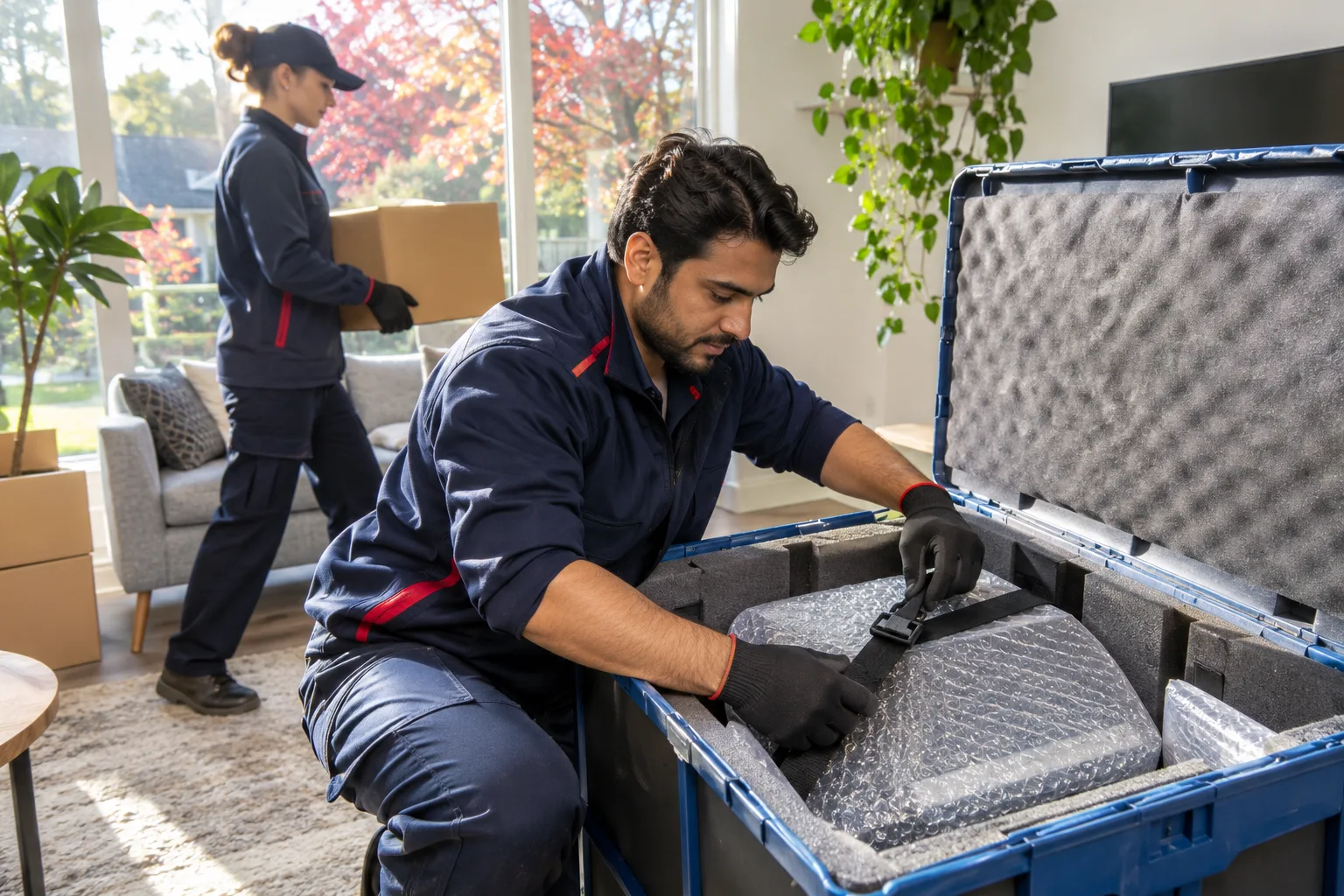
Define what leaves early and what remains in use
Start with two clear groups: the goods covered by the moving company's early collection and the possessions that remain for your own later departure. Identify furniture and cartons individually enough to avoid confusion. Do not describe the early service simply as taking the big things if it is unclear which objects that includes. The estimator needs an accepted inventory, while the household needs to know what will still be available after the truck has gone.
Review the way the remaining belongings depend on furniture being removed. A cupboard may currently contain the clothes you intend to keep, a desk may hold important paperwork, and a bed may be part of your planned last nights at the property. Decide where those possessions or activities will go before the furniture is collected. An early collection can simplify the final departure, but it can also leave the household without a usable arrangement if the inventory is chosen only by size rather than daily needs.
Give the early shipment a defined destination. Ask whether the service provides immediate delivery, an accepted storage stage, or another specific arrangement. Confirm who can receive it and where the furniture belongs. Your own departure date does not automatically establish the truck's delivery window. Keep the two schedules connected but distinct, so the mover can perform its booked handover without depending on a household member who has not yet travelled to the receiving property.
Assess the temporary household after collection
Imagine an ordinary evening after the furniture leaves. Identify where you will sleep, sit, prepare food, keep clothing, and manage personal care according to your circumstances. Arrange the practical temporary setup rather than assume you can improvise it from whatever the crew happens to leave. If you need to retain a piece until later, identify it before the estimate is finalized. A decision made after loading begins may affect the accepted shipment and your own transport arrangements.
Keep essential records, medication, keys, chargers, and necessary work or study supplies outside the early load. Place them in a clearly separate location and tell anyone helping pack that they remain with you. Do not leave the distinction only in a private list. A personal bag beside accepted cartons can be loaded if nobody recognizes its different purpose. The household's retained group should be visible to the person supervising the collection and consistent with the inventory the company receives.
Consider the final departure tasks that require supplies. You may need equipment for ordinary cleaning or other work associated with your property handover. Keep that group identifiable and decide how it will travel or be handled afterward. The carrier's early appointment does not include a later return unless that service is expressly booked. Avoid leaving a collection of necessary tools or supplies without a plan simply because they were useful after the main furniture had gone.
Compare the early service on its actual boundaries
Give each company the same early inventory, dates, and access description. Ask how it prices the limited collection and which preparation, packing, handling, transport, and placement are included. If you are keeping the small items for private transport, make that explicit. Do not compare an offer for the whole household with a furniture-only request without identifying the difference. The total should reflect the particular service you are buying, not an assumed amount of work left for another day.
Ask about minimum periods, travel, stairs, long carries, dismantling, and any storage or additional delivery stage relevant to your arrangement. Confirm how a changed inventory is approved and whether it affects the amount. An early collection does not necessarily become a smaller operational job simply because your personal belongings remain behind. Large furniture, preparation, and access can still control the crew's work, so let the estimator assess those conditions instead of judging the service solely by the number of items.
Read payment, cancellation, and rescheduling terms before accepting the appointment. Identify the business providing the crew and the contact who manages the booking after collection. If another party receives the furniture, agree their role and authority through the company's process. Keep the final scope with the early inventory. It should make clear where the carrier's job ends and where your own later departure begins, without leaving either part dependent on an informal promise that was never accepted.
Prepare the collection without packing away what you retain
Empty or prepare the furniture according to the responsibilities agreed with the mover. If personal belongings must remain, remove them before the packing or collection appointment and place them outside the accepted load. Ask about uncertain drawers, removable shelves, or furniture components rather than assume everything can travel in its existing condition. Keep fittings associated with the piece they belong to and identify who handles any booked reassembly at the destination.
Label accepted cartons and furniture for the receiving rooms. Use a separate clear instruction for objects staying at the original property. Do not rely solely on the absence of a moving label to distinguish the retained group, particularly in a room containing both. Explain the arrangement to the crew lead at the opening review. A precise boundary allows the team to perform the early collection without repeatedly asking whether each nearby possession should also be loaded.
Keep the carrying route usable while you continue living at the property. Private bags, temporary bedding, and boxes for your own departure should not obstruct the furniture path. Ask where the mover wants prepared shipment items to wait. Coordinate any helper's vehicle with the truck's stopping arrangement. The household's continued use of the home needs to support the booked collection rather than create an access condition different from the one the estimator assessed.
Give the receiving address an independent plan
Arrange a receiving person who can attend across the mover's accepted delivery window. They need the relevant inventory, room positions, access instructions, and contact details. If you are still at the old home, make clear which decisions they may make and how they can reach an authorized person. Do not assume that a friend with a key automatically knows where large furniture belongs or can approve an additional service on your behalf.
Check the destination route for the early furniture, including any building appointment and the final room positions. Tell the company about a large piece needing particular preparation or a constrained entrance. Ask what placement and assembly are part of the service. The receiving arrangement should establish a useful home for the objects arriving now, while leaving space for the personal belongings you will bring later. Avoid treating the early delivery as an unplanned pile of furniture that will be reorganized entirely after your arrival.
Have the representative record the handover and identify a specific concern using the inventory descriptions. Explain the company's reporting process and give them access to the relevant accepted documents. If they cannot inspect something fully, retain that limitation in the practical record rather than ask them to make an unsupported statement. A clear delivery review helps you follow up while still managing the original property and your own final travel.
Plan the private departure as its own job
Inventory the remaining belongings after the early collection. Check the capacity, help, and time available for your private transport plan rather than assume everything will fit because the large furniture has gone. Include personal supplies, last-use equipment, and objects discovered in storage areas. If the remaining group is larger than expected, arrange an accepted alternative before the property handover date. The early carrier's completed booking should not be treated as an open obligation to collect whatever remains.
Decide when you will pack the retained group and which items must stay accessible until the final hours. Keep travel documents and keys under a clear personal arrangement. If friends or relatives are helping, give them a defined task and confirm their availability. Avoid building the final departure around a vague offer to help that may not cover the actual timing or volume. Your own stage needs a practical handover just as the paid furniture service did.
Complete the original property's agreed exit process through the responsible contact. Check cupboards, outdoor or separate storage areas, and the places used for temporary living after the furniture left. Keep excluded items and disposal arrangements identifiable. A carrier's collection record can confirm the early shipment, but it cannot establish that the household has completed every later task. Review the property independently before leaving so the two stages do not blur into an assumption that somebody else must have dealt with the remaining possessions.
Manage a changed departure without reopening every instruction
If your own departure moves, identify whether that affects the early shipment's receiving arrangements or only the retained group. Tell the moving company about a change relevant to its accepted service, using the actual date or access issue involved. Do not assume every personal schedule change alters a completed collection or a separately agreed delivery. Keeping the boundaries clear lets you ask for a specific revision where one is genuinely needed.
If you decide to add retained items to the carrier's early load before collection, provide the descriptions and ask the operations contact to assess the addition. Do not put them into the staging area without updating the accepted inventory. If the truck has already left, ask which new service the company can offer rather than treat a second collection as part of the original amount. Keep any new booking and charge identifiable alongside the first appointment's documents.
Use the same discipline when a receiving person becomes unavailable. Arrange an authorized replacement or discuss another accepted appointment before the vehicle reaches the destination. Give the new person the current room plan and inventory rather than a set of earlier family messages. A late change is easier to manage when it enters a defined decision process instead of creating a second, competing version of the move.
Review the early collection and the final exit separately
Keep the mover's collection and delivery records with the accepted inventory, receipts, and approved changes. Assess a specific concern against that service. Use your private remaining-belongings record to check the later departure, so an object you intentionally retained is not mistakenly reported as missing from the carrier's load. The distinction is especially useful when several days pass between the two stages and the household's memory of packing becomes less precise.
Once you reach the destination, reconcile the early furniture with the personal group you brought yourself. Set up the retained possessions around the agreed room placements rather than assume the carrier will return to reorganize the home. If a further moving service is needed, describe that as a new task and request its scope. The household should understand which work has been completed and which work remains outside the first booking.
For a Burlington move with an early furniture collection, choose an arrangement that leaves both handovers workable. The company needs an accurate accepted load and a prepared receiving address. You need a usable temporary household and a realistic final exit plan. Treating those as connected but separate responsibilities lets the early service simplify the relocation without leaving an undefined second move behind.
Check the home after the furniture leaves
Make a brief sketch of the original home in its temporary condition. Show where your retained belongings will wait, where you will use daily essentials, and which areas must stay accessible until departure. Check that furniture removal does not leave something without a suitable place, such as personal records formerly stored in a desk or clothing taken from a cabinet. Give those possessions an intentional arrangement before collection rather than leave them loose when the crew empties the furniture.
Ask the person receiving the early delivery to identify what will not arrive until you bring it. This prevents an essential component or carton from being mistaken for a missing carrier item. Keep the accepted early inventory available to both of you and mark your privately transported group separately. If the two lists overlap, settle the allocation now. A household can otherwise spend time investigating a supposed delivery problem when the object was deliberately retained at the old property.
Finally, decide how you will respond if private transport cannot accommodate the remaining group. Identify a realistic option and the time needed to arrange it. Do not leave the answer as an assumed return by the first moving crew. This fallback belongs to your own departure plan unless a company has accepted it as another service, and it should be reviewed before the final property-access deadline becomes urgent.