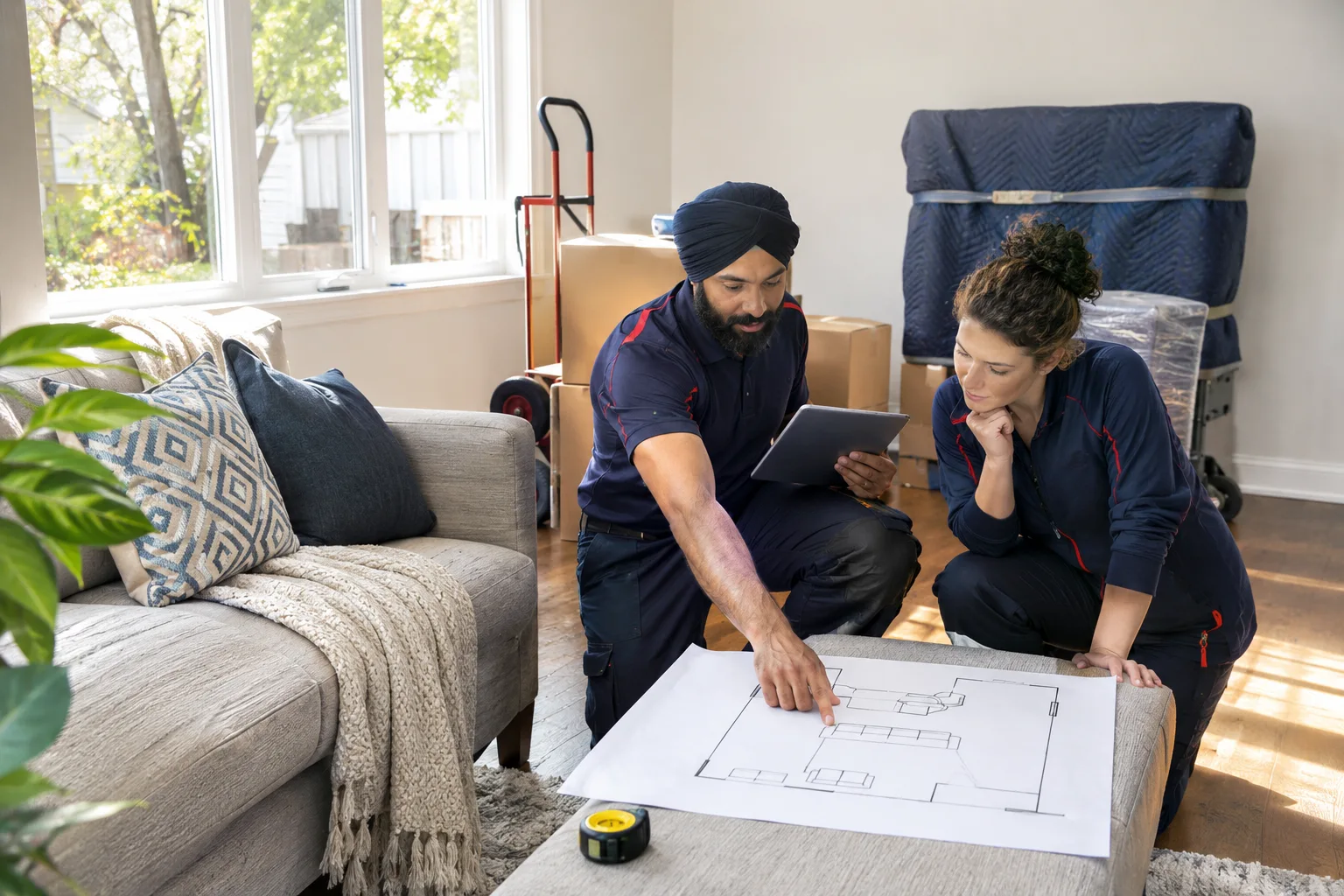
Two homes, one moving brief
Treat the two collection addresses as separate inventories before requesting a combined moving estimate. Name the owner of each group and identify who can approve changes at that property. Keep duplicate beds, tables and appliances out of the final load until someone decides which pieces belong in the new home.
Before comparing Brampton movers, take a walk through both homes with the people whose belongings are involved. A combined move can look efficient because there is one destination, yet the work begins in two different places. One home might be almost empty while the other still contains a full kitchen and several bedrooms. Record the difference rather than describing them as two similar pickups. The written brief should make clear whether the company is supplying packing at either address, whether someone must dismantle furniture and whether a collection can proceed if the main organiser is elsewhere. A relative who knows the house can help with a survey, but familiarity does not give that person authority to change the shipment. Introduce the designated contacts by role. The company needs to know who can answer a question about a cupboard and who can agree to a change in the service. Those may be different people, and the arrangement should remain understandable if the assigned crew has not met the family before.
A shared household can have several people giving instructions without anyone controlling the moving agreement. Choose one booking contact and give the second household a clear way to submit corrections. Record who pays which portion before moving day so a disagreement about family expenses does not interrupt loading.
A room plan before packing
The destination may have fewer usable rooms than the two original homes together. Assign every retained large item to an actual room and measure the likely walking space around it. Photograph the agreed layout so both collection crews work towards the same arrangement rather than competing versions of the plan.
Furniture selection becomes a practical moving decision once the destination has a finite amount of space. Imagine that both households own a large dining table. It is tempting to send both and decide after delivery, but that choice adds carrying, wrapping and space to the shipment without resolving the underlying question. Measure the intended dining area and consider the chairs as well as the tabletop. If the family wants to retain the second set for another purpose, identify that purpose and its room. If it will be stored, request a storage arrangement instead of leaving the crew to find a temporary corner. This discussion also improves estimate comparisons. A quote for one table and a quote for two tables are descriptions of different jobs, even when their headings both say household move. Send revisions to every company still being considered. Otherwise a lower total may simply reflect an older inventory that no longer matches the family's choices, and the comparison will offer little help when selecting a mover.
One total can hide a longer carry or more packing work at the second address. Ask the movers to show how each collection contributes to labour, travel and materials. Check whether waiting at either property changes the total and how an extra stop would be authorised.
Choose the collection order
The convenient first address may contain furniture that should come off the truck first. Describe the destination priorities and let the mover explain a workable loading sequence. Keep the agreement about collection order beside the inventory so a dispatcher can understand the reasoning if the assigned crew changes.
The collection sequence deserves a conversation with the moving company because family convenience and loading needs can point in different directions. A contact might prefer their address to be visited first so they can leave for work. The mover might need to organise the truck around the delivery order or around goods requiring particular handling. Explain the household constraint without prescribing a loading method that the company has not assessed. Ask what arrangement it proposes and whether it affects the other pickup. If different crews or vehicles will be used, request an explanation of how the two inventories are kept identifiable. The family does not need to design the transport operation, but it should understand who is expected at each doorway and which records accompany the goods. Put the two origin addresses in the booking documents correctly. A mistaken unit number or omitted collection location is more consequential than a label colour, and should be corrected before packing begins.
The booking contact cannot remain physically present at two collection points at once. Appoint a responsible adult at each address and share the same inventory version with both. Give each contact authority over a defined set of belongings instead of allowing either person to add the other household's property.
Identify overlapping furniture
Two dining sets can look like intentional shipment when only one was meant to travel. Mark retained pieces with a household code and physically separate items awaiting sale or donation. Walk through the no-move areas with the crew before protective wrapping makes individual pieces harder to recognise.
Origin labels are especially valuable where a combined household owns several similar pieces. A dark bookcase from one property may look almost identical to a bookcase from the other. The destination room tells movers where a piece goes, while the origin code helps the family recognise which one has arrived. Both pieces of information can coexist without complicated private names on every label. Choose short codes and keep the explanation with the inventory. Photograph distinctive features on valuable or easily confused furniture, including existing damage that belongs to a particular piece. If the family has agreed that one bookcase will stay behind, mark it clearly and remove any earlier moving label. A crossed-out instruction can still be read incorrectly when the room is busy. Prepare a clear no-move area where possible, and show it to the crew during the initial walkthrough. Do not use a pile that is still being sorted as though it were a final instruction about ownership or destination.
If one household occupies a basement, its access may differ greatly from the main entrance. Show the movers the actual stairway, turns and landing rather than describing the property as a house. Explain which exterior door will be used and confirm that the path remains available while the other household's truck stop takes place.
Fragile ownership records
Relatives may disagree later about the condition of a cabinet or framed photograph. Let each owner take clear condition pictures and identify existing marks before collection. Keep sentimental items assigned to a named owner so questions can be answered without asking the whole family to decide at the truck.
Two households may also bring two different expectations about packing quality and readiness. One person may consider a taped supermarket carton sufficient for books, while another expects the mover to supply all containers. Ask the company what preparation it requires and what professional packing it can actually provide. Where the services differ between addresses, state that explicitly. A packing team arriving at the first house should not discover that the second house expects the same assistance without having booked it. Pay attention to the final cupboards and everyday items at both properties. Each origin contact should know who handles the remaining kitchen goods, bedding and bathroom supplies. If something will travel in a family vehicle, remove it from the moving list and place it away from the shipment. A verbal assurance that a certain bag stays with the owner is less useful if someone else places it among cartons during the final clean-up.
Boxes from two addresses can arrive with identical kitchen or bedroom labels. Use a distinct household letter followed by destination room names and a box number. Maintain one consolidated box list that preserves the origin information without forcing movers to learn private family relationships.
A holding decision
An undecided sofa can consume loading time if the family debates it at the door. Set a deadline for decisions and identify a separate paid option if temporary storage becomes necessary. Ask how a storage diversion changes handling, access and delivery instructions before choosing it as a last-minute solution.
At the destination, the combined household needs a decision system that survives the excitement of arrival. A receiving person can direct furniture while a second adult checks labelled groups, but they should work from the same plan. Give the crew a clear answer about the first large pieces before cartons begin filling the available space. If someone suggests a different arrangement, pause the decision at the household level rather than allowing several people to give conflicting carrying instructions. A change of mind may be entirely reasonable, yet it can involve extra work once an item has been positioned or assembled. Ask about that work before treating it as an automatic part of delivery. Keep the walkway and door areas clear as boxes arrive. Combining two homes often creates more volume than the family expects, and an accessible temporary zone is more useful than a hurried effort to make every room look finished while unloading continues.
A room plan loses value if several relatives redirect each item during unloading. Have one person receive furniture and another check boxes against the list. Agree that a proposed change goes through the receiving contact so movers are not carrying the same heavy item between rooms repeatedly.
One missing item
A missing chair may still be at the other collection address rather than lost in transit. Check the origin code and collection record before reporting the item as unaccounted for. Keep both origin contacts reachable until the walkthrough ends, particularly where a room was intentionally left partly furnished.
If a piece is missing, begin with identification rather than accusation. Check the origin code, the retained inventory and the place where the item was last recorded. In a two-address collection, an item may have stayed behind intentionally, been assigned to personal transport or appeared under a different description. Ask the origin contact to check the relevant room while the receiving contact checks the delivery record. This investigation should be prompt, but it can remain factual. Describe the item, where it was meant to be collected and the evidence available. Do not assume that another household member has already reported the same issue. Choose one person to correspond with the company and share their updates with the family. The same approach applies to condition questions: identify the particular chair or cabinet rather than saying that the combined furniture collection has a problem. Precise information makes it easier for the provider to investigate the actual handling history.
Medication, identity documents and settlement paperwork may belong to different members of the combined household. Give each adult a personal carry bag and a clear responsibility for dependants' essential items. Do not put these bags among the labelled moving boxes where helpful relatives may accidentally include them in the load.
After the first delivery
A family might later discover that a retained item does not fit the agreed destination. Discuss return trips or later furniture rearrangement as separate work with clear scope. Avoid treating an unfinished family decision as an assumed obligation under the original moving booking.
Keep the administrative ending as orderly as the collection plan. Each household may have its own property handover, utility arrangements and remaining possessions. Those tasks do not become the mover's responsibility simply because the shipment is combined. Ask the contacts to finish their origin checks independently, then bring the results into the shared record. At the new home, confirm the accepted delivery services and identify any specific outstanding concern. If family members want a later rearrangement or another pickup, describe it as new work and request its terms. Preserve the accepted estimate and any revisions alongside the final service paperwork. A combined move generates more messages than a single-address job, so avoid leaving the decisive instruction buried in a family chat that the company never received. The useful record is the one both the household and provider can recognise as the agreed plan, including who accepted a change and which goods it concerned. That record remains useful after the relatives who helped have gone home.
The final sweep needs to cover two properties and two sets of cupboards. Ask each origin contact to confirm their own empty rooms, keys and remaining belongings. Close the shared inventory only after both reports arrive and the destination contact has recorded any delivery concerns.