Define the collection before describing the cartons
Begin with the books you actually intend to move. Identify the rooms, shelves, cupboards, and stored groups that contain them, then separate books being retained from those leaving through another arrangement. If several household members maintain different collections, agree on who will record the final scope. Do not let a room label conceal substantial book storage elsewhere in the home.
Explain the scale and character of the collection to prospective movers without asking them to infer it from a few decorative shelf photographs. Show the occupied shelving and any packed groups, and state which books are still in daily use. Identify volumes needing a separate handling discussion. The estimate should consider the actual contents rather than assume a furnished room contains only its visible furniture. You can keep a more detailed private catalogue where useful, but the transport request needs an understandable account of the groups, packing responsibilities, substantial shelving, access conditions, and receiving arrangement. That gives each company the same physical job to assess.
Separate shelving preparation from packing the contents
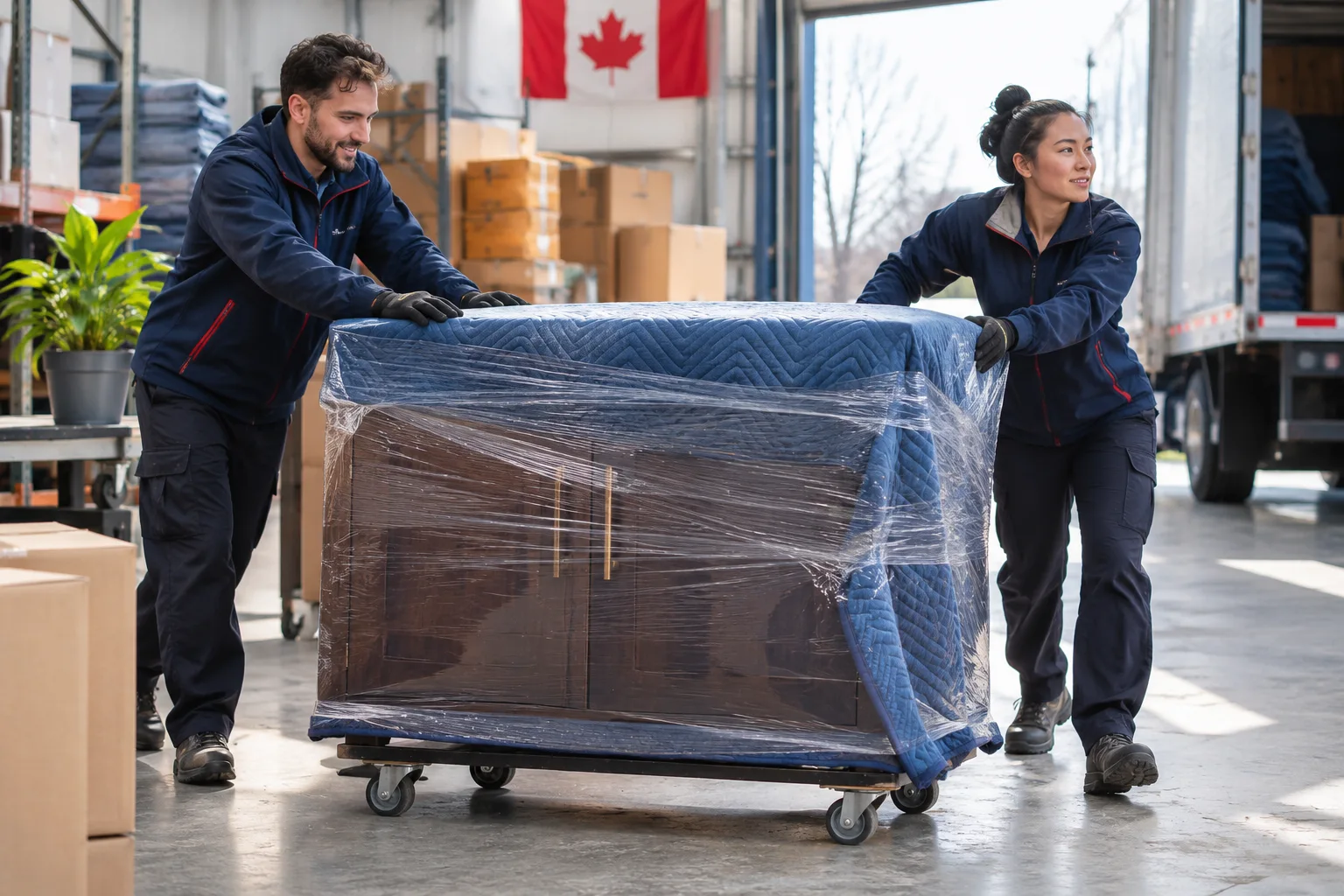
List the bookcases, shelves, cabinets, and associated furniture that will travel. Ask whether the company includes dismantling, protection, reassembly, or agreed placement of those pieces. Keep that work distinct from removing and packing the books. A service that transports an emptied bookcase does not automatically include preparing every volume that originally occupied it, just as book packing does not necessarily establish who will dismantle the shelving.
Identify removable shelves, fittings, cabinet doors, and other components that need to stay associated with a particular piece. Ask how the company wants them prepared or labelled. If another person handles preparation, record what the mover will receive and which tasks remain. Do not begin dismantling unfamiliar or fixed arrangements simply because a moving appointment is approaching. Clarify the actual service and any separate work needed with the responsible people. Keeping furniture and contents on connected but distinct records helps the collection remain traceable when the unpacking order depends on shelving that may not be ready at the same time as the books.
Discuss carton choices and handling limits with the company
Tell the estimator that a significant portion of the shipment consists of books. Ask about the cartons, materials, and packing service it proposes for that load. If you will pack, obtain its guidance on suitable containers and the conditions under which it accepts owner-prepared cartons. Do not assume a large container is convenient simply because books fit neatly into it. The company needs a load it can assess and handle under the agreed service.
Keep carton descriptions and counts current as packing progresses. If the number changes materially from the estimate, notify the booking contact. Ask whether the change affects the proposed crew, vehicle, handling time, or other scope assumptions. A book collection can make a household shipment different from another home with the same room count, so the physical preparation deserves an explicit discussion. Avoid using a guessed carton quantity to create an artificially tidy request. It is more useful to explain what has been counted, what remains unpacked, and when a reliable final inventory will be available for the company's review.
Give the packing order a simple reference system
Choose identifiers that connect each carton to a meaningful part of the collection. A room and shelf-group code can help the receiving person locate books without displaying private details or a supposed value on the outside. Use a system that other people can follow. If a catalogue already exists, decide whether it supports transport identification or whether a simpler carton record is needed alongside it.
Ask anyone packing to use the same identifiers and record a change when a group spans more than one carton. Keep the final list outside the shipment. Do not rely on the exact shelf sequence remaining obvious after books have been divided into closed containers. The mover may not need a title-by-title catalogue to carry the goods, but the household needs enough continuity to recognize which groups were collected and received. Clear references also support a specific enquiry later. A description such as the carton for a named shelf group is easier to investigate than a broad report that some books seem to be missing after several rooms have been unpacked.
Identify books needing a different preparation discussion
Tell the company about volumes or groups that you believe require particular care. Describe condition and relevant features without making an unsupported valuation or assuming that ordinary packing suits every item. Ask what the offered service includes and which preparation decisions remain yours. If an item needs specialist assessment or conservation guidance, arrange the appropriate advice separately rather than expecting a household crew to supply it during loading.
Record existing condition where useful, using identifying details and clear photographs. Keep the purpose of those records practical: showing the item, its visible condition, and the preparation agreed for transport. Avoid writing sensitive or unnecessary collection details on public carton labels. Read the applicable service terms and ask how the company handles an enquiry about damage or a missing item. The question is which record and reporting process support the actual service, not whether a broad statement about handling valuable possessions resolves every concern. A specific preparation discussion gives the company a fair description of the work and helps you recognize which tasks require another arrangement.
Show the routes used by books and shelving
Describe where the collection is stored and how the packed groups and furniture will reach the vehicle. Include stairs, corridors, door openings, thresholds, carrying distance, and the possible stopping point. Ask which information the estimator needs to assess the work. A clear furniture route does not necessarily explain the repeated carrying involved in collecting many cartons from another part of the property.
Provide the relevant destination route as well. Identify the intended receiving room and explain whether shelving will already be available. Ask the company to assess any temporary carton positions as part of the proposal. Do not fill shared walking routes or an unassessed receiving area simply because a final arrangement is unfinished. Where a property question calls for another responsible person's assessment, obtain that information rather than asking the mover to infer a suitable condition from the number of boxes. Accurate routes and receiving positions allow the company to explain its handling service for the actual collection instead of relying on the assumption that individually small cartons make the overall work trivial.
Decide whether the company packs the whole collection
If requesting packing, specify which books and rooms are included and whether the company supplies the materials. Ask when packing occurs, how the inventory is recorded, and whether the same team later collects the prepared shipment. If you will pack part of the library, distinguish that group clearly and explain its current status. Avoid describing a mixed arrangement as fully packed when substantial contents remain for someone to prepare.
Keep packing and furniture responsibilities coordinated. Shelving that must be emptied before dismantling creates a sequence to confirm, while books still in use need a realistic preparation point. Ask how the company handles a materially incomplete packing task and how a changed scope is approved. The answer should relate to your collection and appointment, not an assumption that spare time will appear on moving day. A clear division between company-packed and owner-packed groups lets the estimator assess the work and gives the crew an intelligible handover when it arrives at a property containing both prepared cartons and shelving still holding books.
Compare the library work within the whole household service
Give every company the same collection description, shelving list, packing responsibilities, access details, and destination plan. Include the rest of the household inventory so it can assess the complete move. Ask the estimator to identify how the proposed crew, vehicle, and calculation method reflect the book groups and preparation work. A headline room count cannot substitute for those details.
Compare included packing, materials, shelving preparation, carrying, transport, and final placement alongside the amount. Record any separate assembly or unpacking work requested. If one company excludes a delicate group or requires another assessment, keep that limitation visible instead of comparing its figure as though the identical service is covered everywhere. Ask about additions connected to real uncertainties such as changed carton counts, incomplete preparation, or a revised receiving arrangement. Read the payment and rescheduling terms with the scope. The strongest comparison explains why the offers differ in work or commitments before the household chooses a company on the basis of a total alone.
Prepare for collection without losing the final count
Set a point when the collection inventory will be updated for the last time before the appointment. Record cartons added after an initial count and identify books still travelling separately with the household. Keep the references consistent. If a carton is reopened for personal use, update its contents record as needed and make sure it is ready for transport again rather than leaving preparation to be discovered at arrival.
Walk through the collection with the crew lead and show the prepared groups, shelving, exclusions, and agreed packing tasks. Explain any change from the accepted estimate. Keep the booking coordinator available for a revision requiring approval. After loading, check the rooms, cupboards, and storage areas included in the library scope. Confirm what remains deliberately outside the professional shipment. Retain the collection record and current list apart from the goods. This gives the receiving contact a reliable expectation even if another household member supervised the packing or the final books were prepared shortly before collection.
Plan access if the shipment will be held
Ask the company whether the proposed service includes holding or transfers and how it affects access to the collection. Identify the responsible operator, the inventory continuity, and any preparation instructions relevant to the goods. If you anticipate needing books or records during that period, keep the necessary group with you or arrange an access option the provider actually confirms. Do not depend on an ordinary label marked urgent to make a carton accessible while the main shipment is held.
Discuss the receiving conditions for any planned storage rather than assuming every space offers the same environment or retrieval process. Ask what the provider means by the conditions it describes and whether they suit the items you have identified. Record the release and redelivery arrangements before relying on them. The household should understand what happens to the cartons between collection and arrival, including who can answer a question and which information is needed to resume the next stage. Keeping those decisions explicit helps preserve the collection's identity without inventing a universal storage requirement or assuming the mover provides specialist care it has not offered.
Receive the cartons before rebuilding the shelf sequence
Show the receiving crew the agreed carton areas and furniture positions. Keep the route to shelving clear and explain which pieces require assembly under the booked service. Compare accessible cartons and components with the current inventory. Identify a discrepancy using the group or carton reference rather than expecting the team to recognize the collection's original arrangement by appearance.
Ask how a specific condition or missing-item concern should be reported, and retain the handover documents. Keep the checking process distinct from the household's eventual title-by-title unpacking. The company may have completed its transport and placement while the collection still needs personal organization, or an agreed shelving task may remain outstanding even though all cartons are inside. Use the accepted scope to distinguish those situations. Record a material placement change approved during delivery so the final record describes what the receiving person actually requested. This gives both the household and company a clear basis for closing the service and discussing any focused concern afterwards.
Unpack in an order that preserves the working record
Once the agreed moving tasks are complete, use the collection references to organize unpacking. Check the relevant shelving and receiving arrangement before distributing books through the home. Keep cartons identifiable until their groups have been accounted for. An orderly approach can make a later enquiry more precise because the household can distinguish unopened groups from books already placed in another room.
Retain packing material where it is useful to document a particular concern, and follow the property's actual arrangements for collection or disposal when it is no longer needed. Do not expect the movers to remove all materials or reorganize the collection unless that work was included. If another service is needed for shelving or further internal handling, describe and book it explicitly. Keeping personal unpacking separate from the professional scope allows you to assess the mover fairly while still acknowledging that a library may take time to settle into a useful new arrangement after the vehicle has left.
Choose a mover that understands the collection as physical work
Before hiring St. Catharines movers, review whether the proposal makes the collection visible. You should be able to identify the books, packing responsibilities, shelving tasks, handling routes, receiving positions, and any holding arrangement. Ask for clarification if the company appears to have priced only the furniture or if a carton count still rests on an unconfirmed assumption. The discussion should concern the actual belongings rather than a generic claim about moving a room called a study.
Use the packing-movers, furniture-movers, movers-and-storage, and moving-quotes guides on this site for the connected decisions. Select the services the collection genuinely needs instead of treating every specialist-sounding option as necessary. A well-defined library move explains how a large number of ordinary-looking items will be prepared, identified, carried, and received, while leaving any specialist item question with the appropriate responsible person. That clarity gives the household a stronger basis for comparing companies and gives the selected crew a practical scope it can follow from the first shelf group through the final handover.