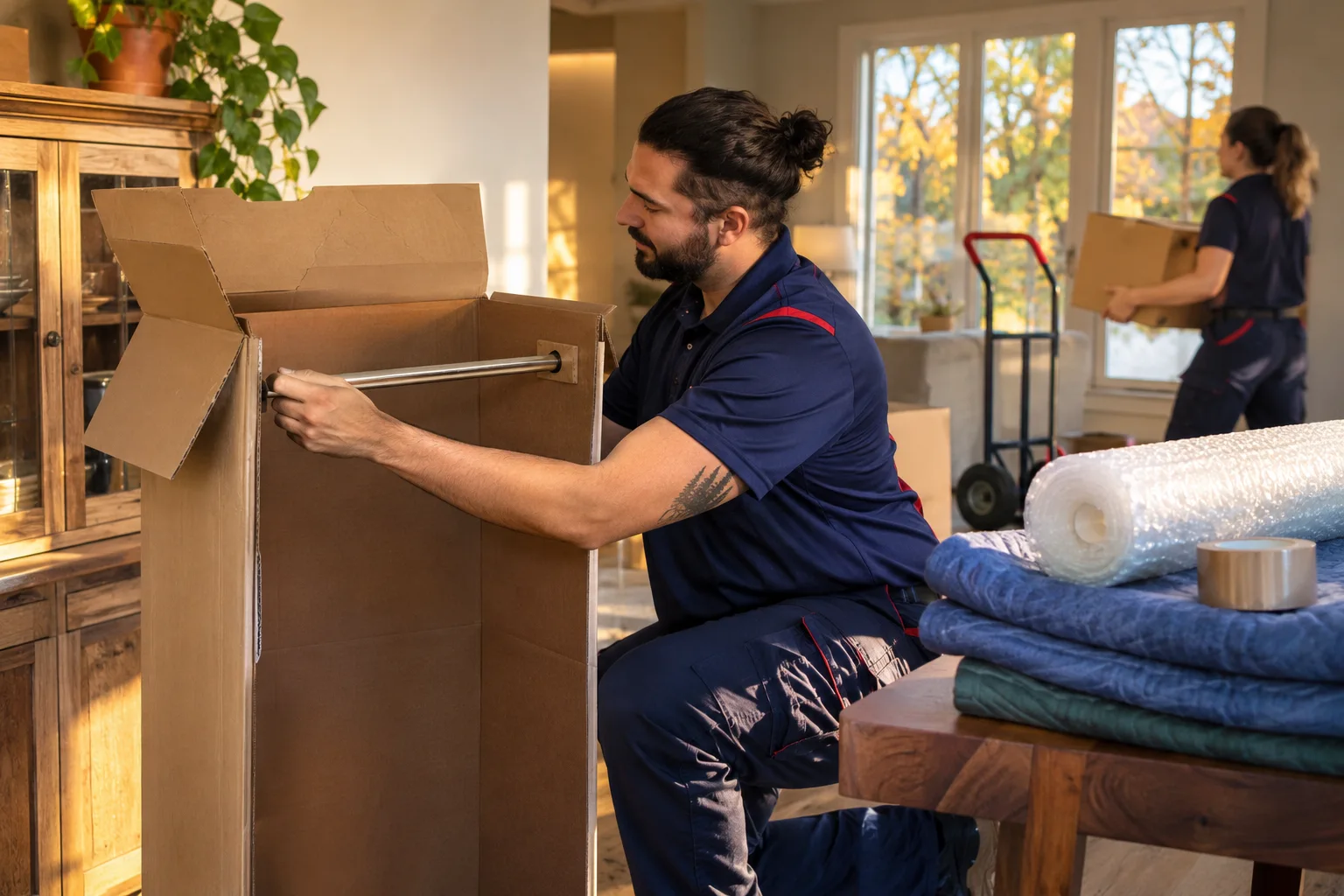
Treat the workshop as a working area to assess
Do not summarize the garage or workshop as a few miscellaneous items. Walk through it deliberately and identify what will move. Include benches, cabinets, shelving, storage bins, garden furniture, and substantial equipment where applicable. Separate the items you intend to sell or leave behind. If you are still deciding, maintain an undecided list rather than asking the estimator to assume that everything visible will fit within a general household allowance.
Describe the workshop's purpose and the belongings without making the company guess their handling needs. A storage cabinet filled with small tools is different from the same cabinet emptied and prepared for transport. Tell the estimator whether the contents will be boxed, who will dismantle shelving, and which equipment requires attention before movement. Ask what information the company needs for unusual or heavy pieces. This is a scope discussion, not a request for the crew to improvise a method at arrival. A clear description allows prospective movers to explain which tasks they can include and which need a separate arrangement.
Separate ordinary belongings from questions about transport
Make a list of items that require a specific conversation with the company. Depending on the workshop, this may concern liquids, chemicals, fuel-containing equipment, batteries, sharp components, or materials the carrier does not accept. Ask about the exact item rather than relying on a broad statement that the mover handles garages. Follow the relevant preparation and transport instructions from the responsible provider, and verify any separate disposal or handling requirements through the appropriate source.
Do not pack a questionable substance into an unmarked household carton to avoid an awkward conversation. If an item is excluded from the service, decide how it will be handled before the collection appointment. Keep that decision on the inventory so it is not accidentally offered to the crew. Ask whether equipment must be emptied, secured, disconnected, or otherwise prepared by someone qualified to do the work. The moving company should explain its own acceptance conditions, while the owner remains responsible for supplying an accurate description. These discussions help keep a workshop move within the service that has actually been agreed.
Describe weight and shape without guessing the method
Provide dimensions and identifying details for substantial equipment or furniture. If you know a reliable weight from documentation, share it; if you do not, say that the weight is unknown. Avoid inventing a convenient estimate that could affect the crew or equipment proposal. Photographs of the whole item, its base, and its immediate surroundings can help an estimator decide what further assessment is necessary.
Ask the company how it evaluates the piece and whether it offers the required handling. A large workbench, metal cabinet, exercise machine, or similar item may have features that are not obvious from a room count. Explain whether parts detach and whether anything has been modified since purchase. Do not begin dismantling an unfamiliar item simply to make it look easier to move. Agree on the preparation responsibility first. If specialist disconnection, lifting, or installation falls outside the company's service, identify the separate provider or competent person responsible and arrange the sequence before collection day.
Assess the route from the workshop to the vehicle
Walk the proposed path from each large item to the truck's possible stopping point. Note door openings, thresholds, steps, turns, slopes, and the outside surface. A garage may offer a wide opening while still having a difficult driveway or a long path to a suitable vehicle position. Give the estimator the actual conditions and ask which measurements or photographs it needs. Identify overhead restrictions or limited turning space where they affect the address.
Check the destination route with equal care. If the new workshop or garage is not yet available, explain where the belongings are expected to go temporarily. Ask whether that receiving area fits the proposed handling and whether a later internal move would be a separate service. Keep access assumptions in the written estimate. A plan based on unloading directly beside a garage may change if the vehicle must remain further away or if the intended door cannot be used. Resolve known constraints before choosing a company, while the route and crew arrangement can still be discussed.
Pack small contents so the inventory remains usable
Group small workshop contents by their intended destination and handling needs. Use suitable containers and avoid making one large carton too heavy simply because the items are small. Protect sharp edges and keep loose components associated with the correct equipment. Ask the company about its packing materials and services if you want help with the contents. Tell the estimator which parts of the packing you will complete yourself.
Use labels that make sense to the person unloading. A carton marked with a destination area and a short contents description is more useful than several boxes all labelled garage. Keep an inventory of important groups without displaying unnecessary private or valuable details on the outside. Separate items that will travel with you or through another arrangement. If work is continuing in the workshop before the move, set a clear date for the final inventory update. Otherwise, a useful tool taken from a packed carton can leave both the packing record and the collection scope inaccurate by moving day.
Agree on preparation and reassembly responsibilities
Ask the company to distinguish transport preparation from specialist work. Find out whether the estimate includes dismantling furniture, protecting surfaces, removing loose shelves, and reassembling agreed pieces at delivery. For equipment, identify any work the company does not perform, such as disconnection, calibration, or installation. Do not use a general phrase such as full service as a substitute for an item-specific answer where the task matters.
Create a preparation list showing the responsible person and the point when each item will be ready. If a separate appointment must happen before collection, give that timing to the mover. Keep fittings and manuals associated with the correct item. At the destination, decide which pieces need immediate assembly and which can remain packed. Ask whether that placement and assembly sequence is reflected in the service. The written scope should connect the condition in which the crew receives the belongings to the condition and location in which it is expected to leave them, without relying on assumptions about what a household move normally includes.
Compare the workshop work within the household estimate
Give every estimator the same complete inventory, including both the home and the workshop. Ask whether the company prices the work as one continuous job or identifies a separate handling component. Record the crew, vehicle, route, preparation tasks, and destination placement used in its proposal. If one company excludes an unusual piece or requires another assessment, do not compare its total as though it includes the same shipment as an offer that covers that item.
Ask about possible additions tied to the conditions you described: waiting for preparation, an extra carry, additional materials, or a changed inventory. Request written clarification of known charges rather than assuming every contingency will apply. Keep payment and rescheduling terms alongside the estimate. If the workshop list changes materially before booking, circulate the revision to all companies still under consideration. A useful comparison explains why the estimated totals differ. It should show whether the difference comes from the amount of work, the handling arrangement, the included preparation, or an assumption that you must complete a task yourself.
Keep collection day clear of unfinished workshop activity
Agree on a point when workshop use will stop and the shipment will be ready. Continuing to work around packed equipment while the crew is loading can create conflicting priorities. Clear the agreed route and separate the items staying behind. Keep the person who knows the equipment available for questions, but let the moving crew manage the handling within its assessed plan. If a condition is different from the estimate, raise it with the lead before the piece is moved.
Walk through the workshop and home together with the inventory. Identify prepared items, excluded materials, dismantled components, and anything that requires a separate collection. Avoid adding a last-minute group of unassessed belongings simply because space appears available in the vehicle. Ask how any addition affects the agreed work and record an approval through the company's process. After loading, check shelves, cupboards, small storage areas, and the floor around benches. Confirm that intentionally remaining materials are understood by the person responsible for the property handover, rather than assuming every leftover item was forgotten.
Prepare a destination that can receive the equipment
Decide where substantial workshop pieces should be placed before delivery. Mark the intended areas on a simple layout and check that the route and receiving space are available. Keep utility access or installation requirements for separate qualified work outside the mover's responsibility unless explicitly included. If the workshop is not ready, identify the temporary holding area and ask the company to assess that arrangement as part of the estimate.
Avoid filling the receiving space with cartons before the larger pieces can be placed. Tell the crew lead which items affect access to others and ask how it proposes to unload. Match carton labels to the designated areas. Keep fittings, manuals, and records available for the next preparation stage. At handover, check that the agreed placement and reassembly tasks are complete or documented as outstanding. A workshop delivery is easier to assess when the scope ends at a defined location and condition, rather than an unclear expectation that every piece of equipment will be immediately ready for use.
Check the work and keep the records together
Record visible condition before collection, particularly for items with existing damage or unusual components. At delivery, inspect accessible surfaces and compare the belongings with the inventory. Describe a concern using the item name and any identifying reference. Ask how to report a missing component, handling damage, or incomplete agreed task under the company's process. Keep those questions distinct from equipment servicing or setup that was outside the transport scope.
Review the final invoice against the accepted estimate and approved additions. If the description of an extra charge is unclear, ask which work it represents. Keep the photographs, preparation list, inventory, estimate, delivery record, and receipts together. These records help answer a specific question without trying to reconstruct the workshop's contents from memory. If some belongings remain in storage or await a separate delivery, record the next contact and appointment. Completion of the household portion should not obscure an outstanding equipment or furniture stage that still needs an authorized receiving arrangement.
Choose a mover that explains the actual job
A home with a workshop in Truro needs a company willing to discuss the belongings, preparation, and access in practical terms. Before choosing, read the proposal as a sequence of responsibilities. Who prepares each unusual item? Who supplies the packing or handling equipment? Who opens the workshop, receives the delivery, and approves a change? Ask the company to explain any gap between those stages while you still have time to make another arrangement.
Use a specific uncertain item to test your understanding. Ask what would need to happen if that piece is not ready by collection, or if its destination changes to storage. The answer should identify the process for revising the scope and schedule, rather than simply promising to work something out. Keep the confirmed response with your booking record. The furniture-movers, small-moves, storage, and quote guides on this site can help you separate related questions. Use the sections that apply to your belongings, then request an estimate for the full job you intend the company to perform.
Plan the overlap with other household work
A workshop move may take place while cleaning, repairs, or separate collections are still happening at the property. Put those activities on the same schedule before choosing the moving appointment. Identify any person who needs access to the same entrance, driveway, or working area. Ask the mover whether the proposed overlap would interfere with the route it has assessed. Avoid assuming that the crew can simply work around an unrelated collection vehicle or an unfinished preparation task.
If another person will remove an excluded item, label it clearly and give them an appointment that fits the broader plan. Confirm who remains responsible if that collection does not happen. Do not let an excluded item quietly return to the household inventory because it is still present when the movers arrive. Discuss a changed scope through the booking contact and obtain the company's response before treating it as part of the service.
Keep the final preparation list short enough to use. Mark completed tasks and leave genuinely unresolved matters visible. The list should tell the crew what it can collect, tell the owner what remains to be arranged, and tell the receiving contact what condition to expect. This is more useful than a long checklist that makes every task appear complete merely because a moving date has been reserved.