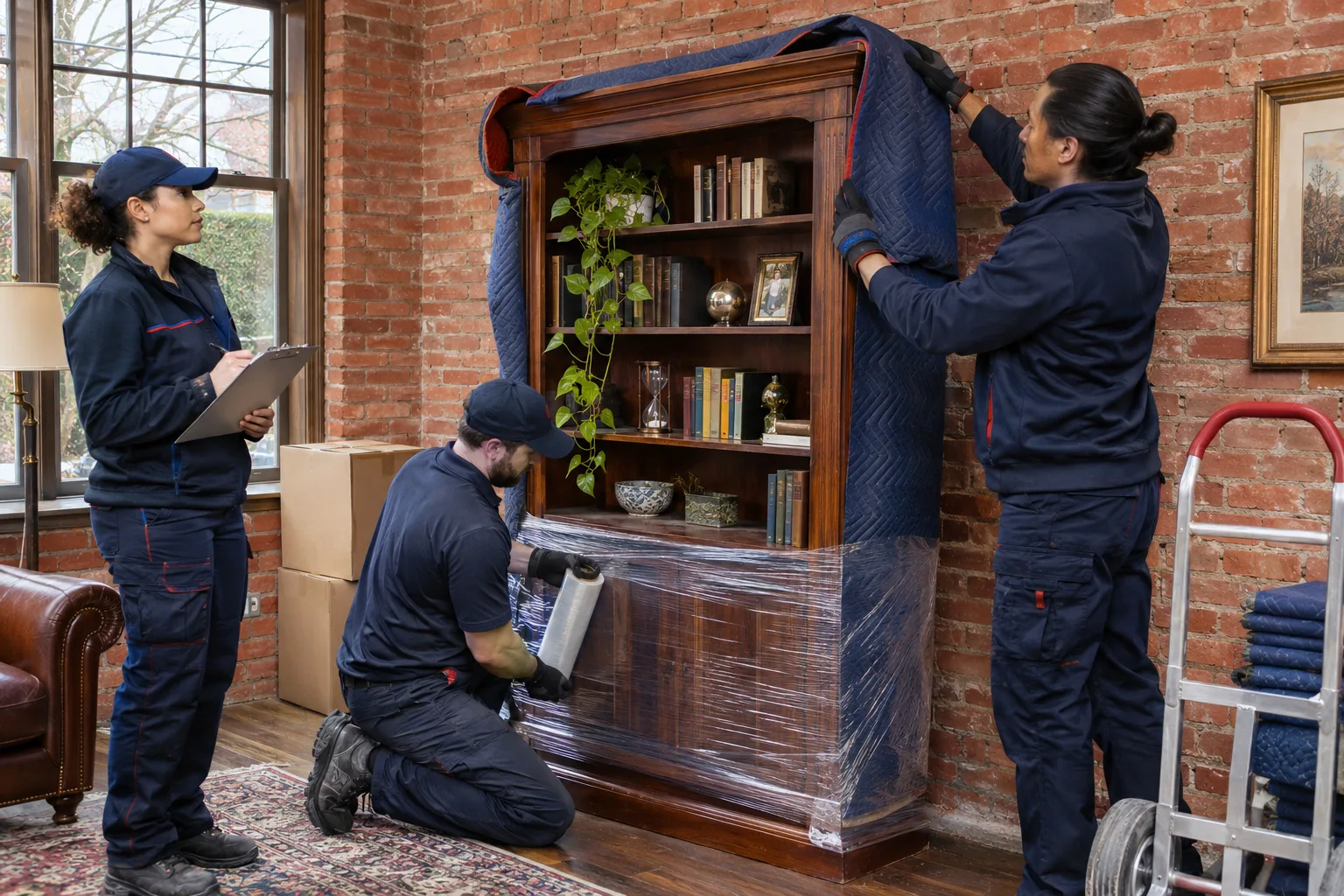
List the route for each large piece
Identify where important furniture starts and where it must finish. Describe the stairs, turns and landings along that route. Ask the estimator which measurements it needs. A single note that the home has stairs does not explain the difference between a boxed item and a large cabinet.
A sofa on the entrance level may have a direct route outside, while a bed on an upper level needs preparation and a stair carry. Explain both. The estimate should reflect the actual work rather than treating every room as if it had the same access.
Ask the estimator to identify which pieces control the handling plan on each level. Their routes may differ, so keep the origin room, exit route and intended destination connected to the individual item. Tell the company whether a piece was assembled in place or reached the room through another route during an earlier move. Do not expect the crew to infer that history from the furniture's appearance. If the item is not suitable for the route you first proposed, ask what assessed alternatives the company offers and decide before collection. The inventory should describe the pieces selected under that accepted arrangement, rather than include an unresolved item as though it were ordinary ready-to-load furniture.
Connect each difficult item to its particular route.
Assess the landings and turns
Measure the usable space at changes of direction, not only the width of the stairs. Provide photographs from useful angles where requested. Ask the company to identify any uncertainty before booking, especially when a large piece was assembled inside the room or entered through a different route previously.
A tall cabinet may pass through a doorway but still meet a tight turn at a landing. The company should know about that stage before sending the crew. Do not assume a successful previous move proves that the next route is suitable for the same furniture.
When recording a staircase, show the parts where direction or usable space changes. A clear opening at the top does not explain a tight landing below it, and the width of an empty corridor may change once a door is open. Ask the carrier what evidence it needs, then obtain consistent photographs and measurements. If you are uncertain, say so and request further assessment instead of estimating a favourable dimension. The customer does not need to design the carrying method, but should provide an honest description of the route. Keep the company's response with the large-item list so another household member does not later promise a different entrance or preparation method without discussion.
Obtain an assessment of the complete route rather than one opening at a time.
Clarify furniture preparation
Ask which dismantling and reassembly tasks are included and who supplies the knowledge or instructions for unusual furniture. Keep fittings associated with the correct piece. If the customer plans to prepare furniture, agree on the condition the company expects when its crew arrives.
A bed frame may need to be taken apart before it can leave the room. The booking should state whether the household completes that work or the crew does it. Unfinished preparation can affect the loading sequence, so it should not remain an assumption.
Make the preparation list specific enough that both the household and company know what will be ready before the first carry. Identify removable furniture components, the person preparing them and the way their fittings will be kept together. Ask whether reassembly at the destination is included or needs a separate request. If the household cannot complete a task it accepted, contact the company before the day to discuss a revised scope. Do not leave a partly prepared item at an upper level with an assumption that the crew will finish it. The time, information and responsibility required for that task should be agreed while the company can still assess the whole job.
Use a named preparation list for the furniture that changes shape before transport.
Choose destination labels that name the level
Use room labels that distinguish similar spaces on different levels. Share the names with the receiving coordinator and mover. A simple system can prevent cartons reaching the wrong landing and needing another carry once other furniture is already in place.
If two bedrooms have similar names, add the level and a clear room identifier. Avoid relying on a family nickname that the crew cannot interpret. The destination list should remain understandable when the customer is busy checking another part of the delivery.
Choose labels that distinguish location from ownership. The crew needs to know which level and room receives a carton, while the household can retain a more personal contents list separately. Use the same room names on signs, inventories and the receiving map. If a room's purpose changes after labels are applied, tell the coordinator which instruction now takes precedence. Avoid giving several crew members different verbal corrections. A single revised map can prevent repeated carries and makes the final check easier. The receiving person can then review each level against a stable plan instead of trying to remember where a carton was moved after somebody gave a new instruction on the stairs.
Match carton labels, room signs and the receiving layout.
Discuss protection for the actual stair route
Ask what the company brings to protect furniture and the relevant property surfaces. Explain any particular concern about the route. Keep protection arrangements consistent with safe movement through the stairs and landings, and identify any item the property owner must supply separately.
A customer may want a specific finish protected but should not improvise loose coverings that obstruct the crew's path. Discuss the concern with the mover before the day. The agreed service should describe who prepares the route and how the crew keeps access usable during work.
Discuss property protection as part of the assessed route, particularly where stairs or landings leave limited working space. Explain the surfaces of concern and ask what materials and preparation the company includes. If the property contact expects a particular protection item, establish who supplies it and when. The household should not create a loose or obstructed route in an attempt to be helpful. Keep unrelated belongings and temporary materials away from the carrying path. Where a change to the agreed protection arrangement is needed, ask the crew lead or operations contact rather than directing workers independently. The objective is a usable route that fits the company's accepted handling method and the property's relevant requirements.
Record the protection responsibility without prescribing an unassessed handling method.
Stage cartons without blocking movement
Ask where packed cartons should wait before collection. Keep the agreed route clear, particularly where several rooms feed into one landing or staircase. Separate items staying behind so the crew can follow the inventory without sorting them in a narrow working area.
A household may be tempted to move every carton to the top of the stairs. That can make the area less usable rather than helping. Obtain the company's staging instructions and use the available rooms in a way that supports the planned carrying sequence.
Ask the mover how packed goods should be staged on the different levels before collection. A household may save its own space by placing everything on a landing, but that area may be needed for furniture movement. Follow the preparation instructions the company gives for the actual route. Keep selected and excluded groups distinct without blocking doors or turns. If another person finishes packing later, tell them why particular areas must remain available. This reduces the risk that an otherwise ready home becomes harder to load because a helper moves cartons into the most convenient shared space without understanding how the crew expects to use it during the agreed carrying sequence.
Prepare the holding areas around the crew's agreed route.
Compare the crew proposal with the work
Give each estimator the same large-item routes, preparation list and destination layout. Ask how it proposes to staff and schedule the move. Compare the assumptions behind the estimated time or total instead of deciding that one crew arrangement must be better simply because it uses a different number of workers.
An offer based on entrance-level access may not match a job involving several stair routes. Request a revision using the confirmed details. Keep the explanation with the estimate so the operational team understands why the job was described in that way.
Compare crew proposals with the same route evidence and preparation assumptions. Ask each estimator how the service accounts for the large pieces, the levels involved and the work remaining with the customer. A different number of workers or a different pricing method should lead to a scope question rather than an automatic judgement about quality. If a company has not assessed a difficult route, find out what remains conditional before relying on its estimate. Keep its explanation in writing. The comparison becomes more meaningful when the offers describe the same prepared shipment and destination work, instead of one company pricing straightforward collection while another includes substantial preparation and placement across several levels.
Judge the proposal against the assessed work rather than a crew-size slogan.
Plan the receiving sequence around large furniture
Tell the company where the largest pieces belong before unloading begins. Ask whether the loading plan can support that order. Keep the intended room clear long enough for the agreed placement, rather than filling its entrance with cartons before the main furniture reaches it.
If a bed must pass through a landing also used for boxed belongings, the receiving coordinator should know which route needs to stay clear. This does not require a complicated minute-by-minute timetable. A few explicit placement priorities can prevent avoidable repeated handling.
Choose a few placement priorities that keep the receiving route usable. Large furniture may need to reach its room before cartons occupy the approach, but the carrier should explain how this fits its loading and unloading arrangement. Give the receiving coordinator the accepted priorities and ask them to keep the relevant spaces clear. Do not label every carton as first priority, since that leaves no useful distinction for the crew. If the household wants a different room after delivery begins, channel the request through the coordinator and ask about the practical effect. The working plan should remain clear enough that the crew can complete the booked placement without repeated, conflicting changes on the same stair route.
Agree which spaces must remain open until the large pieces are placed.
Respond to an unexpected route problem
Ask who can reassess the work if a piece does not fit the described route or a condition has changed. Keep the customer or authorised decision-maker available. Avoid asking the crew to attempt a different unassessed path simply because the original plan has become inconvenient.
A newly installed fixture or furniture change may reduce usable space. Inform the mover before arrival if you become aware of it. If the issue appears during work, ask for a clear explanation of the options and how a revised instruction is recorded.
If access differs from the assessed description, pause the instruction and obtain the company's explanation of the available options. Tell the decision-maker exactly which piece and route are affected. A helper may be able to confirm a dimension or move a small unrelated obstruction, but should not approve an unfamiliar carrying method outside their role. Keep the agreed change with the inventory and note whether another task or appointment remains necessary. This avoids presenting a temporary placement as the completed plan when the customer expects more work. It also gives the operations office a precise issue to address rather than a general message that the furniture move has become difficult somewhere inside the home.
Keep the decision factual and tied to the item and route involved.
Check each level before closing delivery
Use the destination list to review the agreed placement and carton locations. Check associated furniture parts where preparation was included. Record a specific issue using the item identifier and the room, so the company can understand it without reconstructing the whole movement through the home.
A carton found on another level may have been mislabelled rather than omitted from the truck. The receiving record helps separate those situations. Once the locations are checked, raise any remaining concern through the process in the agreement and retain the relevant documents.
Review the receiving list by level while the records and relevant people are available. Check large furniture groups with their associated components and confirm the preparation or assembly included in the agreement. If a carton appears missing, look first at the room labels and any approved placement changes. A delivered item on another level requires a different response from a piece that remains unaccounted for. Record a condition concern using the identifier and location, and ask the company how to submit it under its process. The completed handover should distinguish ordinary later rearrangement by the household from a specific part of the booked moving work that still needs attention.
Finish with a level-by-level review against the actual booked scope.