Describe fragility by item
List the pieces that need an individual handling conversation instead of marking the whole move fragile. Explain their dimensions, materials and existing condition. Ask the estimator whether photographs or a closer assessment are needed before it can describe suitable packing and transport work.
A glass-front cabinet, a framed picture and a carton of cups do not need identical preparation. The company should be able to explain which service it proposes for each group. A single fragile label on the inventory does not show whether those differences have been considered.
Begin with a short assessment list that tells the company why each piece needs attention. Useful details might include a removable glass section, a delicate projecting part or an existing fault that affects handling. Supply photographs that show those features clearly and ask what further information is needed. You do not need to diagnose a packing method yourself, but the estimator needs an accurate description of the object it is being asked to accept. If the company proposes a survey, arrange it before relying on the final scope. This keeps the fragile-item discussion connected to the actual possessions rather than a general promise to take extra care with the whole household.
Keep a separate record of the pieces that need an agreed preparation method.
Choose who packs each group
Decide which items you want the company to pack and which you intend to prepare yourself. Ask how that division affects the service agreement and the process for reporting damage. Make the distinction visible in the inventory so the collection crew can identify the two groups.
If the company packs mirrors while the household packs ordinary dishes, note both arrangements. Avoid assuming that supplying cartons means the mover has accepted responsibility for the way every carton was filled. The scope should explain who prepares, closes and labels each group.
When packing responsibility is divided, identify the point where the household's work ends and the company's begins. For an owner-packed carton, that may mean the customer provides a sealed and labelled container ready for collection. For a company-packed piece, the appointment may include materials and preparation before loading. Ask the estimator to describe those distinctions using the groups in your inventory. If a helper finishes a carton originally assigned to the packing team, tell the company rather than leaving the original record unchanged. The purpose is to maintain an accurate account of the service supplied, including the terms relevant to a later question about how a particular group was prepared.
Use named packing groups rather than an unclear promise that packing is included.
Request the materials as part of the scope
Ask which cartons, wrapping, padding and other protection are included for the pieces you have described. If the company proposes special preparation, request an explanation of what will be supplied and when. Do not substitute an unassessed material simply because it is convenient or already in the home.
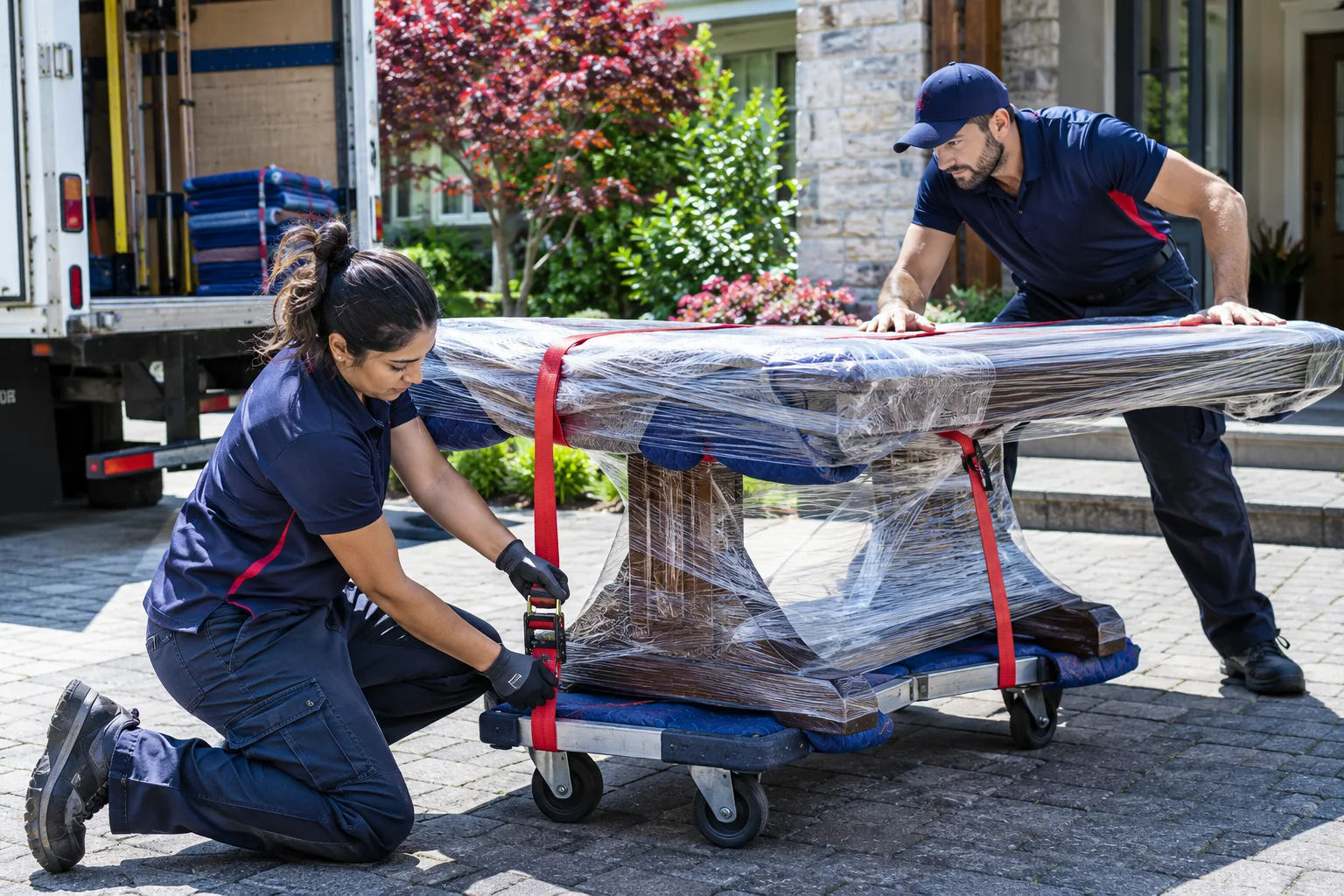
A large framed item may need a specific packing appointment or materials that are not carried as ordinary supplies. The customer should know that before the loading day. The estimate should distinguish the preparation from the later work of carrying and placing the item.
Ask how special materials are selected and provided for the actual pieces. A customer who buys packaging independently should check whether the carrier accepts that arrangement and what preparation it expects. Avoid assuming that an unused carton or wrapping product suits every object because it was sold for moving. If the company is supplying preparation, make the item available in the condition it requests and keep the working area clear. Clarify whether the packing and loading happen together or at separate appointments. That timing affects how the household uses the room, what remains accessible and who must attend to answer a question before the protected piece is released for transport.
Confirm that the booked preparation matches the actual dimensions and condition.
Create identification that survives the journey
Give important pieces and cartons consistent identifiers. Record the destination room and a useful description without exposing sensitive personal information on the outside. Ask the company how it relates its handling record to the inventory you supply. Keep a copy that remains accessible while the goods travel.
If several similar picture cartons are used, an individual number makes it easier to ask about one of them. The receiving person can identify the intended location without opening every container. This also helps distinguish a missing carton from one placed in an unexpected room.
Plan identifiers so a person at delivery can recognise the intended item without undoing unnecessary protection. A number and a concise description can connect the outside package to the household's more detailed record. For similar framed pieces, keep photographs in the personal inventory rather than exposing private information on the wrapping. Ask the carrier how its own numbers relate to that system. If a piece is repacked or transferred into a different container, preserve the connection instead of introducing an unexplained new label. Clear identification is valuable when the receiver did not supervise packing and when a particular item must be checked or placed before other belongings fill the room.
Keep the identifiers consistent through packing, collection, storage and delivery.
Discuss the route out of the room
Fragile furniture needs a practical route as well as protection. Describe narrow openings, turns, stairs and the distance to the truck. Ask which components require removal and who performs that work. Do not assume the crew can solve a difficult route safely without information about the item.
A cabinet may fit through the front door only after a component is removed. The company should assess that before arriving, and the customer should understand what preparation is included. Mark any loose components so they remain connected to the correct piece throughout the move.
Discuss the complete carrying route before preparation hides useful features of the furniture. The estimator may need to know dimensions with and without detachable components, the space available for a turn or the position of a fragile section. Confirm who removes and protects those components. If the household performs that task, keep the part with its identifier and explain its transport arrangement. Do not remove an unfamiliar section merely to make the dimensions appear easier. Ask the responsible provider to assess the work. The resulting plan should connect packing, carrying and placement so the crew is not faced with a protected object whose route was never considered properly.
Agree the route and preparation together rather than treating them as separate questions.
Plan how belongings enter storage
If the shipment will be stored, discuss that before the packing method is agreed. Ask how the items are handled at the storage stage and what access is available during the holding period. Keep the record clear about who is responsible when the goods leave the truck and enter another space.
A household that expects to retrieve a fragile piece during storage should explain that need early. The carrier may recommend a different arrangement or tell the customer that convenient retrieval is not part of the service. Make the decision before the shipment is packed around that item.
A storage stage can introduce another handling event and a later receiving crew, so describe it while the packing service is being selected. Ask whether items stay in the same protection, what records accompany them and which contact handles a retrieval request. If you anticipate using a fragile item before the rest of the shipment is delivered, explain that need specifically. The operator may offer a suitable arrangement or advise that convenient access is not part of the service. Make the choice before the load is organised around the item. Keeping a personally needed piece outside storage may be more practical than asking for an unplanned partial release after it has been placed behind other goods.
Include storage handling and final delivery in the fragile-item conversation.
Keep the condition record specific
Photograph important pieces before preparation and note existing marks or faults. Use the same identifier in the condition record and inventory. Ask how the company records a concern at collection and which documents the customer receives. Retain copies outside the shipment so they can be reviewed during delivery.
A photograph of an entire room may not show a small existing chip or a particular panel clearly. Take useful views of the relevant item without expecting photographs to replace a service agreement. The record should explain the known condition and the item being discussed.
Make condition photographs useful for identifying the exact piece and the area of concern. Take a clear overall view and the relevant detail, then keep them with the dated inventory. Tell the company about a known defect that could affect preparation or handling rather than assuming it will be obvious during a hurried walkthrough. Ask how the crew records its own observations and retain the document it supplies. This gives both parties a reference when discussing the service later. The record should describe what was known before collection; it should not contain a speculative explanation of damage or imply that a photograph replaces the terms the customer accepted in the moving agreement.
Make the evidence usable for someone who did not inspect the home.
Explain where items will be placed
At the destination, choose a clear receiving area and identify the intended room for large fragile pieces. Keep the route available. Ask whether the booked service includes unpacking or removing protection, and whether any components will be reassembled before the crew leaves.
If a customer wants to inspect a protected item with the crew, agree when that happens. A room crowded with unopened cartons can make both placement and inspection harder. Prepare enough space for the agreed task rather than expecting the team to improvise around unrelated furniture.
Arrange the destination so the booked inspection or unpacking can actually be performed. Identify the space needed for a large protected piece, keep its approach available and decide where other cartons can wait. If the service stops at placing a wrapped item, do not assume the crew will also open it and arrange the contents. Ask for that work to be included if you need it. Where a receiving helper attends, explain the agreed procedure and give them the relevant item identifiers. They should be able to recognise what is being delivered and document a concern without making new packing or care decisions outside the role they have accepted.
Match the receiving space to the handling and inspection work you have booked.
Compare protection terms carefully
Ask the company to explain the available protection, exclusions and reporting process in relation to the actual pieces. Keep those terms with the packing scope. A general statement about insurance does not explain every circumstance, especially where the household and company divide responsibility for packing.
One offer may describe a professional packing service while another assumes owner-packed cartons. Ask how each agreement treats that difference. The comparison should show the work and the relevant terms rather than presenting both totals as if the underlying arrangements were identical.
Read the protection terms alongside the packing division and the pieces selected for transport. Ask the company to explain an unclear exclusion using the item involved, rather than settling for a broad assurance. Compare the written responses from the companies you are considering. If one offer assumes professional packing and another assumes that the household supplies sealed cartons, keep that difference visible in both the service and terms comparison. Do not describe the offers as equivalent merely because each mentions insurance. Retain the accepted documents and the packing inventory together so the person reviewing a later concern can identify which arrangement applied to the particular piece being discussed.
Resolve unclear conditions before deciding which estimate fits the shipment.
Report a delivery concern by identifier
If an issue appears at delivery, record the item number, the location of the concern and the relevant condition information. Ask the company how to submit it through the process in the agreement. Keep the description factual and retain the packing materials where they may help explain what happened.
A note saying that several fragile things were damaged gives the office little information to investigate. A specific description of the identified item and its condition is more useful. Keep that issue separate from an unrelated timing or billing question so each matter can be addressed clearly.
When documenting a concern, describe the object, its identifier and the visible issue before discussing possible causes. Keep relevant photographs, delivery notes and any useful packaging associated with that record. Ask the company where the report should be sent and what information its process requires. If a helper notices the issue before the customer arrives, have them retain their specific observation rather than offer a general opinion about the whole shipment. Distinguish the item's condition from an unrelated concern about timing or placement. A focused report gives the responsible contact a practical matter to investigate and helps the household follow the response without losing the details among several separate moving-day questions.
Maintain the record until the company has answered the specific concern.