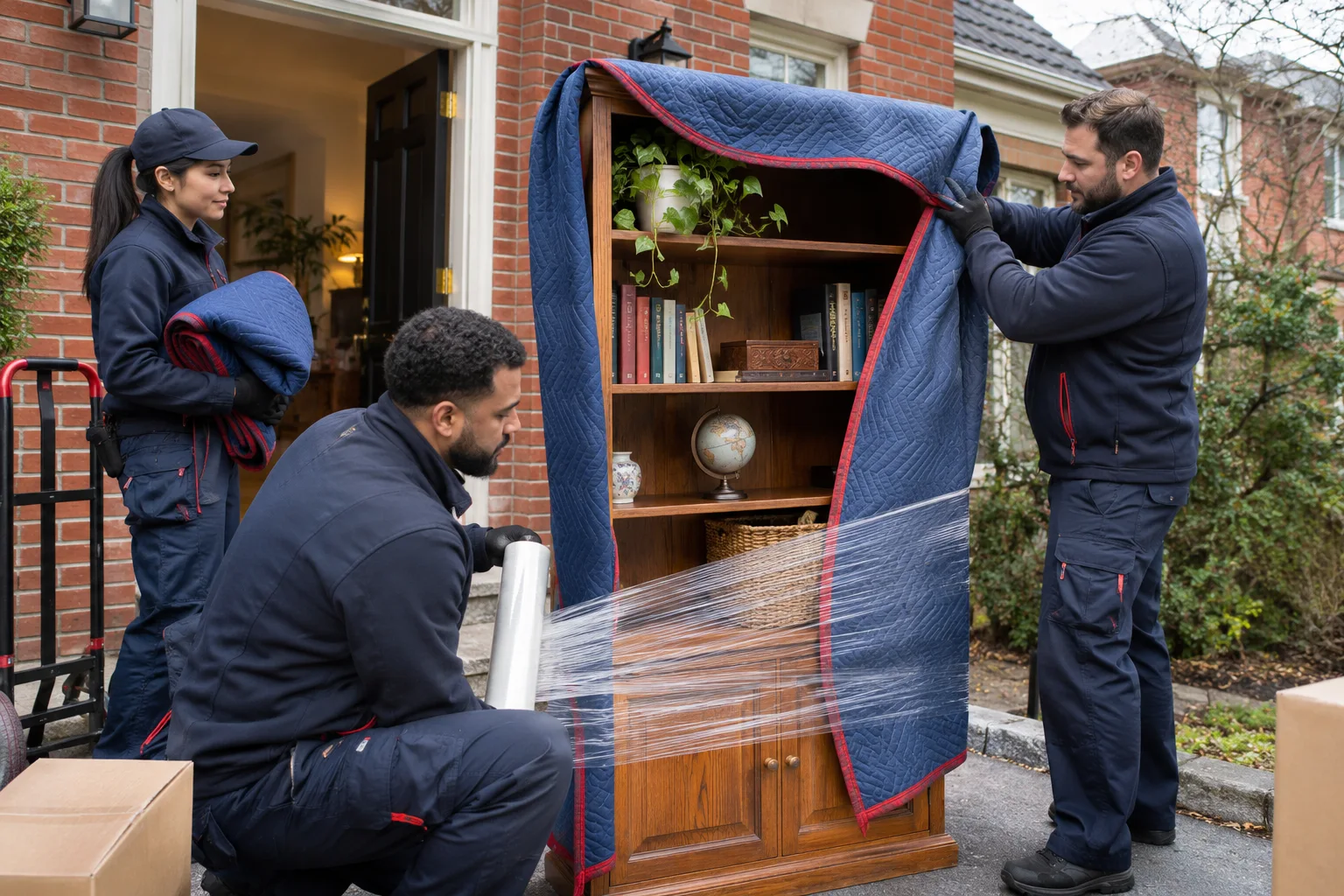
Coordinating two restricted building appointments
A move can depend on access windows at both properties rather than the distance between them. Consider a household leaving one building and entering another on the same day, with reserved loading or elevator periods. The mover’s proposed sequence needs to fit both reservations and leave a way to respond if one stage changes.
Two building reservations can control a moving day more tightly than the drive between the addresses. The collection building may allow a limited loading period, while the destination has its own entrance procedure and booked unloading time. The mover needs to know both before proposing a working sequence.
The example here concerns a household using reserved building access at each end. It does not assume that every property in Longueuil has the same rules or facilities. The owner’s task is to obtain the instructions for the actual buildings and explain them accurately. The carrier’s task is to assess whether its offered arrival window, crew, vehicle, and service scope fit those conditions. Hiring should resolve that fit before the appointment becomes a fixed commitment.
Obtain both sets of building instructions
Ask each property manager for the entrance, reservation hours, loading location, and any preparation required. Keep the instructions with the booking request. Do not assume that permission at the collection property establishes access at the receiving building.
Get the access information from each building’s responsible contact rather than relying on what another resident remembers from a previous move. Ask about the entrance, loading point, available hours, reservation process, and any preparation the building expects. Keep the two sets of instructions labelled by address so their differences remain visible.
Explain the confirmed requirements to every company providing an estimate. Distinguish a reservation already accepted from a time the household has merely requested. The carrier cannot design a reliable sequence around an appointment whose status is unclear, and one company’s estimate should not quietly assume access another company knows is restricted.
Keep the building confirmations with the current booking documents. If a property changes its instructions, pass on the change before the crew is dispatched. A revised entrance or arrival period can affect the working plan even when the apartment number and shipment size remain unchanged. Give the carrier the current conditions, not simply a copy of the first enquiry.
Compare the proposed arrival window
Give the company the actual reservation times and ask whether its plan fits them. Record the expected sequence rather than treating a general morning appointment as a confirmed loading start. If the periods conflict, discuss another arrangement before accepting the booking.
Ask the company to place its proposed arrival within the actual reservation schedule. A broad morning window may not fit a short loading appointment. Find out what the company is committing to and which parts remain estimated. If the two building periods cannot be combined sensibly, discuss another collection or delivery arrangement before accepting the service.
Do not solve a conflict by promising that the household can load faster than the company has assessed. Give the estimator the inventory, preparation status, and full access route, then ask whether the proposed crew and sequence remain practical. The company should explain its own working assumptions.
Where the appointment depends on another person opening an entrance or providing access, include that dependency. Confirm the person’s availability and the contact method the crew should use. A reservation recorded on a calendar is less useful if the people required to make the space accessible are working from a different arrival expectation.
Explain the full route to the vehicle
Describe the walking distance, doors, lift access, and stopping point at each property. Tell the estimator about any portion of the route that is shared with residents or other deliveries. A reserved elevator is only one part of the loading arrangement.
Trace the route from the belongings to the vehicle at each building. Explain the distance through hallways, door arrangements, elevator use, and the nearest permitted stopping place. Mention any long carry or a shared area that cannot be kept clear for the full appointment. The reservation does not describe those physical conditions by itself.
Give the estimator photographs or measurements requested for a difficult piece or opening. A room list with an elevator booking can still leave an important handling question unresolved. Ask whether the company needs further assessment before it accepts the work under the available access period.
Check which parts of the route the household can prepare and which remain under building control. Clear personal obstacles where appropriate, but obtain the actual process for shared spaces. Tell the carrier about a condition you cannot guarantee, rather than presenting a convenient route as reserved when another delivery or resident may still need to use it.
Keep packing complete before access begins
Decide which preparation must be finished before the crew can use the booked window efficiently. Separate last-minute personal belongings from the shipment. Ask how unfinished packing would change the service rather than assuming the building appointment can simply be extended.
Use the packing plan to protect the booked access period. Decide which cartons, furniture preparation, and personal items must be ready before the crew starts. If packing is part of the hired service, confirm when that work occurs and how it fits the building’s permitted hours. Do not assume a packing appointment is included within a transport estimate.
Identify the final personal group that stays with the household and keep it outside the collection area. The crew should not have to wait while people search ordinary cartons for documents, keys, or chargers. Tell helpers which bags are excluded so those belongings do not drift back into the marked shipment.
If preparation falls behind, contact the company before arrival and explain the actual state of the home. Ask how the change affects the working sequence and accepted scope. An unfinished packing job may require another plan; it should not become an unspoken assumption that the building will extend a reservation or the crew will perform unbooked work without review.
Name the building contacts
Keep the person who can provide entry or resolve access questions reachable during the appointment. Share the appropriate contact with the carrier. A receiving relative may be able to direct furniture placement without being able to authorize a loading-bay change.
Keep a usable contact for each building beside the carrier’s operating number. Identify who can provide entry, confirm the loading location, or respond to an access problem. The person who booked the reservation may not be available at the same time as the crew, so establish the practical handover in advance.
Tell the receiving person which access decisions belong to the building. A family member can direct a carton to a room without necessarily being able to change an elevator reservation or loading-bay allocation. If a question concerns a shared facility, it should reach the person responsible for that facility rather than remain an argument at the vehicle.
Confirm how the building contact and carrier will communicate if the arrival window changes. The household may need to pass an update or obtain a new reservation. Keep the accepted response with the move record. This preserves a clear distinction between the carrier’s operating decision and permission controlled by someone else.
Agree on a response to delay
Ask what happens if loading takes longer, an elevator becomes unavailable, or the receiving appointment cannot be used as planned. Record who makes the next decision and which charges may apply. A practical contingency is more useful than an assurance that delays never happen.
Ask the company to explain what happens when the planned access sequence is interrupted. Use a concrete question, such as an unavailable elevator or a receiving period that can no longer be used, rather than asking for a general promise that the day will be smooth. Identify who reviews the situation and how the next step is approved.
Discuss the charges or service changes that may be relevant under the agreement. Keep the answer tied to the actual contingency described. Do not assume that every delay is included, or that every interruption automatically creates the same additional amount. The carrier’s written terms should explain the basis on which a revision is considered.
Have the authorized customer reachable during the affected stage. A building employee or receiving helper may report the problem without being authorized to accept another service. If the original plan cannot continue, obtain a clear instruction for the next stage so the household, carrier, and property contact are not each expecting a different solution.
Prioritize unloading instructions
Provide a clear destination layout for large furniture and labels that correspond to rooms. Avoid using the restricted delivery window to make decisions that could have been settled earlier. The receiving person should know which items stay in their protective packing and which booked assembly tasks are required.
Prepare the destination layout before the unloading reservation begins. Identify large furniture positions and use room labels that match the cartons. Give the receiver a plan they can follow without calling the owner about each piece. Time reserved for access should support the booked delivery rather than become the first opportunity to decide where the household will place its furniture.
Check any assembly or protective unpacking included in the service. Tell the company which tasks are required at delivery and which the household will handle later. If the receiving period imposes a practical limit, discuss the full work with the estimator instead of assuming placement alone describes the appointment.
Keep the route and receiving rooms clear of separate deliveries. If a retailer or another service is also arriving, coordinate those appointments with the building. The moving company should not discover that a reserved loading area has been given to another business because the household treated each booking as an independent event.
If the receiving person arrives before the crew, ask them to check that the booked entrance and working area are actually available. They should report a new obstruction or conflicting delivery through the responsible contact, rather than quietly redirecting the truck to an unassessed position. Keep the original reservation information accessible while that question is resolved. This allows the household to describe what changed and gives the carrier a concrete access issue to review before furniture is brought into the shared route.
Close the reservations as well as the move
Check the shipment and any agreed service before the crew leaves, then follow each building’s handover process. Record damage or access concerns factually through the responsible contact. Keep the moving invoice and property-related paperwork together without assuming they are handled by the same business.
Review the shipment and the agreed delivery tasks before closing the carrier’s appointment. Identify concerns through the inventory and retain any condition record needed for follow-up. The receiver should also complete the building’s own access handover where applicable, using its stated procedure rather than assuming the mover manages every property requirement.
Keep property-related records separate enough to identify their source. A question about a building reservation and a question about the moving invoice may involve different businesses and different decisions. Preserve the relevant messages so neither concern becomes lost inside a general account of the day.
Afterwards, compare the completed service with the accepted estimate and approved changes. If an interruption altered the route or appointment, retain that explanation. These records let the household identify what was actually agreed when the original two-building sequence changed, instead of treating the first preferred timetable as the only possible account of the booked work.
Use the agreed scope throughout the handover
For this Longueuil scenario, start with the actual reservation information from both properties. Give it to the companies being considered and ask how their proposed service fits. The guide does not establish any building’s rules, reserve a facility, or guarantee that a particular carrier can meet the requested period.
Keep the two access records current while the rest of the household plan develops. If the inventory, packing arrangement, or receiving contact changes, consider whether the building sequence still fits. The company needs an accurate description of the job it will encounter, not only the timetable the household first hoped to use.
The strongest hiring decision is a workable commitment about the crew’s arrival, the access route, the included tasks, and the response to a disruption. Once those points are clear, the household can prepare the property and receiving layout around the service actually accepted. That reduces avoidable uncertainty without pretending that every part of a busy building appointment is under the owner’s control.