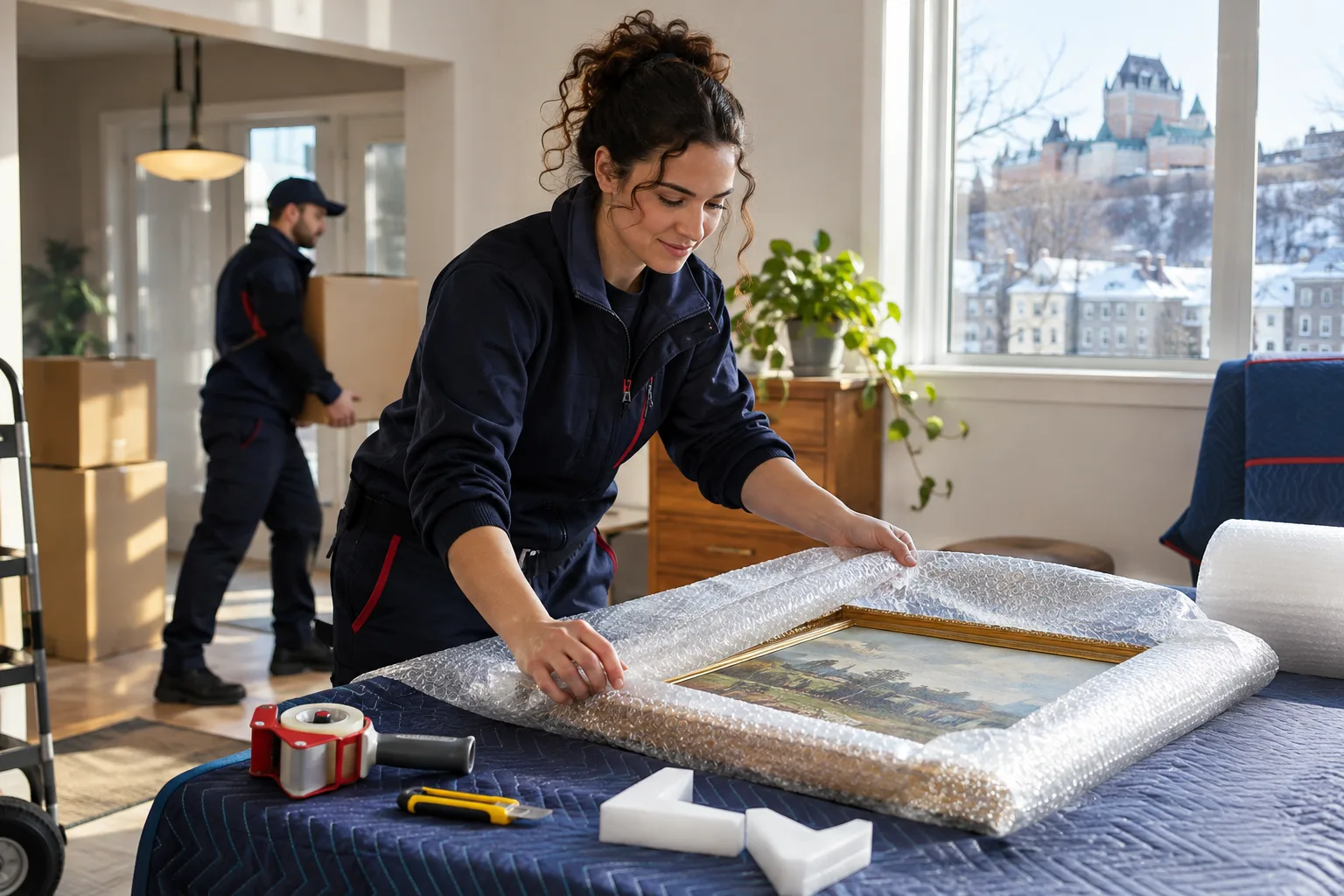
A considered move from a long-established home
A move from a long-established home often involves decisions that should be made before the crew arrives. Consider an owner choosing a smaller selection of furniture while relatives take other belongings. The useful mover is one whose scope fits the decisions already made and the pace of the planned handover.
A smaller destination requires household choices before it requires a truck. Start with the owner’s daily routines, the dimensions of the receiving rooms, and the furniture the owner actually wants to keep. A moving company can assess and transport that selection, but its crew should not become the group making family decisions about possessions during collection.
The example here follows a move from a long-established home, with some belongings going elsewhere through separate arrangements. It asks how to hire the packing and transport help that fits the settled selection. The owner may receive assistance with documents, sorting, or attendance, while retaining authority over the possessions. The service record should make that practical division clear to everyone who supervises the work.
Measure the destination before selecting furniture
Use the new room dimensions and access route to decide which large pieces will travel. Keep a clear list of chosen items rather than asking the crew to judge what should fit. A floor plan helps the receiving person explain placement without making new family decisions during unloading.
Begin with a measured layout of the new home. Identify the furniture needed for sleeping, sitting, eating, and the activities important to the owner. Check the access route for the largest pieces as well as their proposed room positions. A piece that occupies the right amount of floor space may still need a separate assessment to reach that room.
Discuss the choices with the owner before asking the carrier to price the final inventory. Give the list a clear status: chosen for the move, still undecided, or assigned to another arrangement. Avoid presenting all furniture in the old home as a confirmed shipment when the receiving space cannot accommodate it.
If the selection changes, update the inventory used by the company. Explain whether the change affects packing or handling, not only the total number of pieces. The accepted request should reflect the owner’s actual decisions so the crew can concentrate on the booked work instead of repeatedly asking which option the household intended to choose.
Separate the different destinations
Identify belongings going to the new home, relatives, donations, storage, or another arrangement. Keep the moving company’s responsibility specific to the work booked. A room full of undecided items creates uncertainty even when each individual piece is easy to handle.
Keep the new-home shipment distinct from the belongings going to relatives, donations, disposal, or storage. Identify each group using a clear system and tell the moving company which destinations are included in its booking. Separate services need their own contacts and handovers, even when they happen at the same property.
Where excluded belongings must remain near the collection area, mark them clearly and point them out during the crew briefing. A helper may move an object into a different room without realizing that the room was being used to distinguish destinations. The item reference should control the instruction rather than its temporary location alone.
Check the sequence of the different collections. If another person needs furniture removed before the carrier can reach the chosen pieces, arrange that timing in advance. Do not assume that the household mover will wait, coordinate other visitors, or absorb extra handling caused by an unresolved outside collection unless that work has been discussed and accepted.
Protect the owner’s decision process
Agree who maintains the inventory and who can approve changes. A relative may organize the documents while the owner retains control over possessions. Record decisions before the working day so the crew is not placed between conflicting instructions from different family members.
Identify the owner’s authority separately from the practical assistance being provided. A relative can maintain the list or attend an appointment without acquiring an unrestricted role in deciding which possessions move. Tell the company who can answer inventory questions and who can approve a material change to the service.
Resolve known differences of opinion before the working appointment. If the owner has not decided about an item, say that it is undecided and ask how it should be treated in the estimate. The crew should not be placed between conflicting directions from people who each appear to be speaking for the household.
Provide a current record to anyone assisting on the day. Include the chosen-item list and the important exclusions, while keeping private family discussions out of the operational brief. A concise instruction that an item stays behind is more useful to the crew than a history of the decision, provided the authorized person has settled that instruction.
Give personal records their own travel plan
Set aside identification, important correspondence, keys, and other documents the owner needs during the transition. Keep them out of the general packing area. Decide which person will carry and receive them rather than relying on a carton labelled important.
Make a personal document group that travels with the owner or a designated trusted person. Identify the papers and keys needed during the transition without placing sensitive details on ordinary carton labels. Decide who carries the group, who receives it, and where it remains while packing and collection take place.
Keep that group visibly separate from the moving shipment. Helpers should know that a particular bag or container is excluded from loading, even if it sits near the packed cartons. The owner may need the documents before the truck reaches the destination or while other belongings are unavailable.
If someone else will assist with the papers after the move, agree on that handover privately and provide the practical instructions needed. A transport booking does not make the crew responsible for managing the owner’s personal records. The carrier needs to know what it should leave, while the household needs a reliable arrangement for the records it chooses to carry itself.
Choose the right amount of packing help
Ask whether assistance is needed for the whole home, fragile items, or selected rooms. Compare the written scope of packing and transport separately. Leave space in the plan for the owner to identify sentimental belongings before they are packed with ordinary household goods.
Decide where packing help would make the most practical difference. The owner may want help with the whole chosen shipment, selected fragile pieces, or particular rooms. Ask each company to describe those services separately from transport so the comparison does not depend on an undefined full-service label.
Leave enough preparation time for the owner to identify sentimental belongings before they enter ordinary cartons. If a relative assists, keep the owner’s decisions visible in the packing brief. A familiar object may have a different intended destination from the rest of the furniture around it, and its physical location may not explain that choice.
Ask about materials, the packing appointment, and any booked unpacking or material removal. Confirm which tasks the household will complete before the packers arrive. The service should support the settled selection rather than create a second sorting session during an appointment that was priced only for preparing items already chosen to move.
Make the receiving home usable first
Prioritize the bed, main chair, bathroom supplies, lighting, and other daily essentials that apply to the owner. Give the crew a practical placement plan. A successful unloading should support the first day in the new home rather than merely fill every available space with cartons.
Prioritize the receiving arrangement around the owner’s first day. Identify the bed, main seating, lighting, bathroom items, and other essentials that apply to the household. Decide their positions before unloading and give the receiver a plan that the crew can use without making new decisions about the rest of the home.
Keep essential cartons identifiable and tell the company which group they belong to. This can guide placement at delivery, but it does not establish access to them during transit. Carry personally any item that cannot be unavailable while waiting for the shipment. Ask the company to explain its pickup and delivery window so the household’s personal arrangements fit the service actually offered.
Avoid filling the useful areas of the new home with undecided furniture simply because the old property must be cleared. If another destination or storage arrangement is needed, decide it before loading. The receiving appointment should leave the owner with a workable space, using the possessions selected for that purpose.
If someone will stay with the owner after delivery, include that person in the practical room plan. Identify the items they need to reach and any cartons that should remain unopened until the owner is ready to sort them. This helps the helper support the first day without making further possession decisions or obstructing the access the crew needs to finish its work.
Avoid combining unresolved jobs
Keep estate decisions, disposal, storage retrieval, and family collections distinct from the mover’s confirmed appointment. If several services are involved, identify the handover between them. Do not assume the transport crew will coordinate every person attending the old property.
List the different services and people involved in clearing the old property. Distinguish the mover’s appointment from donation collection, family visits, storage release, or other work. Give each a responsible contact and confirm any dependency between them. If one stage must happen before another can begin, that sequence needs an actual arrangement.
Do not ask the transport crew to take over every unfinished household task because it is the last service attending the property. Extra sorting, moving excluded pieces, or managing another visitor may fall outside the booking. Raise a proposed addition with the company and obtain the accepted scope before relying on it.
Keep the owner informed about the practical sequence at a pace that allows decisions to be understood. If plans change, update the people supervising the relevant stage. A current brief protects the owner’s settled choices without requiring the crew to interpret several different instructions from family members and other service providers.
Review the completed service calmly
Keep the accepted inventory and agreed scope available for the final check. Record a specific concern while the relevant item and paperwork can be identified. After the crew’s work is closed, allow the owner’s settling-in and household decisions to continue at a manageable pace.
Use the chosen-item inventory to check delivery and any booked assembly or placement. The receiving person should identify a concern by item or task, with supporting condition information where relevant. Keep those transport concerns distinct from the owner’s later decisions about how to organize the home.
Ask the moving company about its reporting process for a missing item, new damage, or unfinished agreed work. Retain the response with the delivery record. If the owner notices a concern while unpacking, the inventory and packing references should help describe the actual piece rather than relying on a general statement about a room.
After the appointment is reviewed, let the household’s settling-in continue without treating every remaining carton as an incomplete service. Some unpacking or rearrangement may belong to the owner or another helper unless it was expressly booked. The written scope makes that distinction visible and gives everyone a fair basis for deciding whether the hired work was completed.
Use the agreed scope throughout the handover
For a Québec City move from a long-established home, begin the enquiry with the owner’s settled selection and the destination layout. Ask companies to price the packing, handling, and receiving work that selection requires. Do not substitute an unreviewed list of everything in the old property for the belongings the owner has chosen to take.
Keep the inventory, exclusion decisions, packing brief, and receiving record together while the move is completed. The documents do not need to contain private family history. They need to preserve the directions that affect the company’s work and the authority of the people providing those directions.
The example does not promise a particular form of senior assistance or suggest that every mover offers the same packing or settling-in service. Confirm the actual scope with the business you choose. A carefully defined request allows the household to obtain useful help while keeping decisions about possessions with the person whose home is changing.
Leave the owner a copy of the final chosen-item record in a place they can use after the move. A relative maintaining the documents should explain any change in the final arrangement and identify belongings that remain elsewhere. This lets the owner continue making household decisions with a clear, reliable account of what has already happened, rather than depending on another person’s memory.