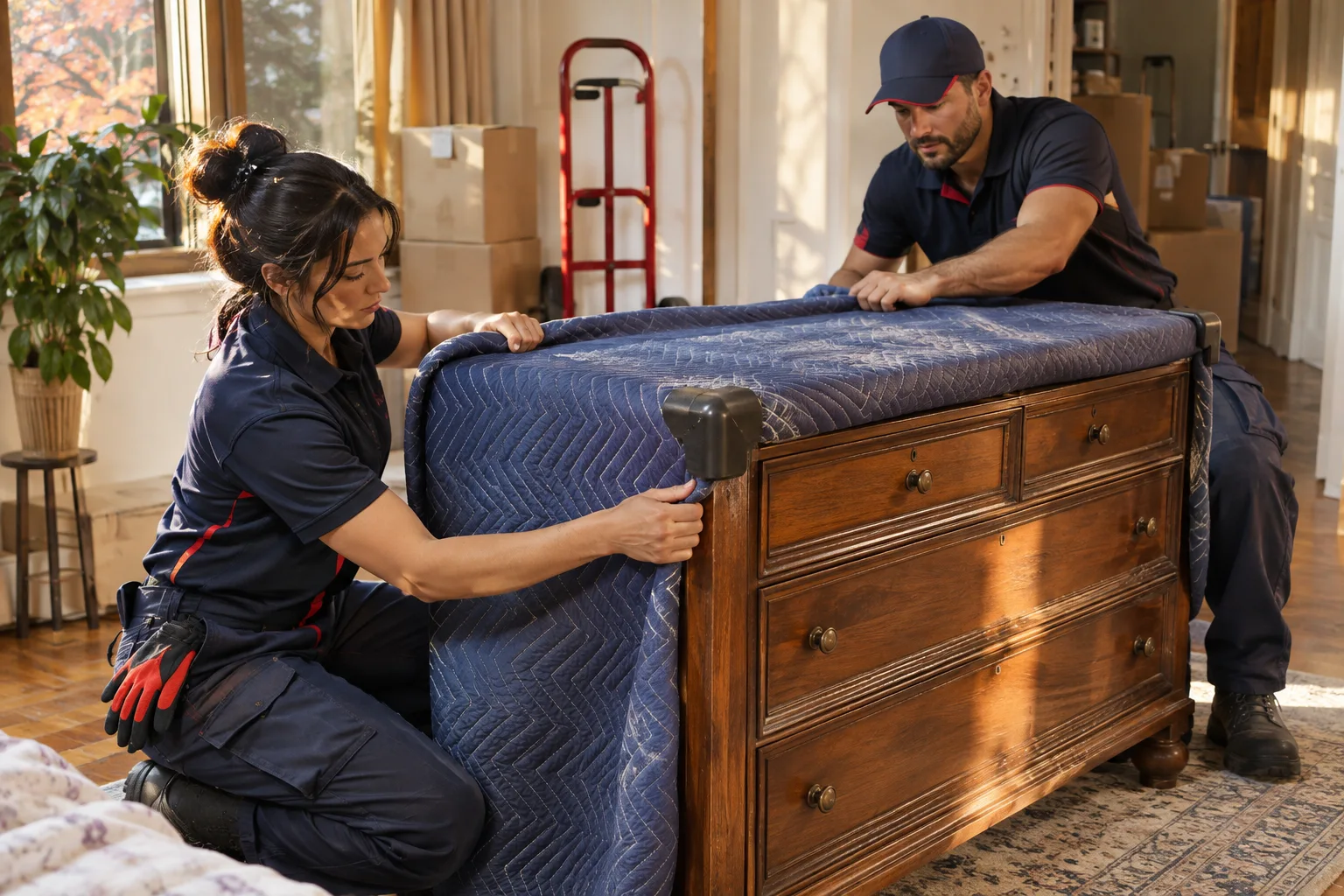
Describe furniture by its handling needs
List the pieces individually and explain their size, construction and general condition where relevant. Identify glass surfaces, detachable components and unusual shapes. Ask the company which measurements or photographs it needs. A furniture category such as cabinet can describe very different objects, so the proposal should be based on the actual piece and the route it must follow.
A lightweight shelving unit and a heavy display cabinet may occupy similar floor space but need different preparation and handling discussions. Show the estimator which item is included. Describe each piece sufficiently for the estimator to distinguish its construction and handling needs. Include dimensions the provider requests, photographs showing delicate parts and any known condition that matters to preparation. If you are uncertain whether something detaches, say so rather than giving the team an assumed dismantling instruction. The assessor should decide what additional review is needed before proposing its method. Keep a reference for the actual item, especially where a property contains several similar cabinets or tables. A furniture booking should connect the named piece, its preparation and its access route, so the working team does not arrive with a broad category but none of the details used to assess the job.
Which details does the provider need to assess each unusual or heavy piece?
Trace the route through both properties
Check the route from the current room to the vehicle and from the delivery vehicle to the intended new position. Include turns, landings and entrances. Ask the mover to assess uncertain points rather than assuming an item will fit because it entered the old property previously. The receiving route may present an entirely different problem.
A dining table may leave through a wide patio entrance at collection but reach the destination through an internal hallway. Both routes need to be described. Compare the two complete paths rather than checking only whether a piece fits through one entrance. Identify the approach to the vehicle, the internal turns and the final receiving room. Ask which measurements and photographs help the provider assess the uncertain points. A patio route available at collection may have no equivalent at delivery. Likewise, an item that entered a property before other furniture or alterations may no longer have the same path. Tell the assessor about those differences and obtain a revised review when the route changes. The household's responsibility is to supply an accurate description, while the company responsible for handling decides how the assessed work can be performed.
Has the assessment considered the full path at collection and delivery?
Agree on dismantling before pickup
Ask what dismantling the company provides and which pieces require further assessment. Tell the provider about unusual fixings or previous modifications. Keep the responsibility for components and fittings clear. Avoid beginning work that changes the item before confirming how the crew expects to find it, particularly when the service includes its preparation.
If a bed frame has several similar fittings, agree how its parts are identified and kept together so the receiving team can recognize the intended assembly. Ask the provider to distinguish the furniture preparation included in its service from work assigned to the household or another specialist. Explain unusual fittings and any previous alteration, then let the responsible team determine what needs review. Agree how components are identified and kept with the correct piece. If an item will travel in a partly dismantled condition, make sure the receiving plan includes the agreed finishing work. Avoid starting preparation simply because it appears convenient if it changes what the crew expects to find. The scope should describe the particular furniture and its components rather than leave the household to discover after arrival that preparation or reassembly was never included.
Who prepares, labels and retains the components removed from a furniture piece?
Empty furniture according to the agreed plan
Ask the company how it expects furniture contents to be prepared. Do not assume every drawer can remain full or every cabinet must be handled the same way. Separate personal items you need during the move. Tell the estimator if emptying a large piece is work you need included rather than a task you can finish yourself.
A household might have a filing cabinet that still contains records and a chest of drawers with everyday clothing. Describe both so their preparation can be addressed specifically. Discuss contents piece by piece where the preparation is uncertain. Tell the mover what remains inside and ask how it expects the furniture to be presented. Personal documents and immediate-use items should be removed from the shipment group before the crew begins. If emptying furniture is work you cannot finish, ask whether the provider can assess and include it. A statement that the room is ready can be misleading when drawers or cabinets still hold an unrecorded group of belongings. Keeping preparation explicit also prevents the household from assuming furniture contents are inventoried or protected in the same way as separately packed cartons when the company has not agreed to that arrangement.
What contents must be removed before the furniture is ready for the crew?
Discuss protection for finishes and delicate elements
Identify existing marks and sensitive finishes before collection. Ask how the booked service protects the piece and handles removable shelves, glass or other delicate parts. Keep the condition record available. Avoid assuming that general furniture wrapping covers every unusual component without the company reviewing the piece and explaining the included preparation.
A glass-fronted cabinet may have separate shelves or doors that need their own handling discussion. Make those parts visible in photographs and the item description. Show delicate components and existing surface concerns when requesting the estimate. Ask what preparation the company proposes for those specific elements and which tasks it includes. The assessor may need to distinguish removable shelves, doors or glass from the main furniture body. Keep photographs and identifiers available if the item passes between teams. The household should not need to prescribe a protective technique, but it should understand which preparation has been assessed and booked. If a concern is later noticed, a clear record can identify the relevant area and distinguish it from a different piece with a similar finish, without depending on someone remembering the exact appearance at collection.
Which delicate components require preparation beyond ordinary furniture protection?
Make placement part of the delivery request
Decide where each large piece should go and confirm that the receiving space is available. Ask which placement and reassembly tasks are included. Furniture delivery can be difficult to supervise when the household has not chosen rooms or keeps changing the plan. Give the crew an understandable outcome without prescribing its handling method.
If the new room layout changes after the estimate, tell the provider before delivery rather than asking the team to carry a large piece through an unassessed additional route. Decide the intended receiving position and make the route available before delivery. Tell the provider about a room that remains occupied, another delivery or work that affects the placement. Ask which reassembly and finishing tasks the proposal includes. If the household changes its mind about a room, check whether the new instruction alters the assessed carry or working sequence. The team needs a clear outcome within the booked service rather than a series of attempts to find a position the household has not chosen. A room plan and consistent labels help a receiving contact give useful directions without requesting repeated furniture moves or an unreviewed route through another part of the property.
Does the booked delivery include the placement and finishing work you expect?
Explain furniture being sold or transferred
A furniture move may connect a seller, buyer and moving company. Identify who provides access, who confirms the item and who receives it. Make sure the provider has the relevant contacts and agreed scope. Avoid assuming the crew can resolve a disagreement about which piece is included or whether the seller has prepared it.
A buyer may arrange collection from a property they cannot attend. The collection contact should know the identified furniture and the preparation agreed with the buyer and mover. Where a buyer arranges collection from someone else's property, connect the seller's preparation and access with the mover's accepted scope. Identify the exact piece and confirm who can acknowledge it at pickup. Give both parties the relevant appointment information, while keeping any ownership or condition agreement between the responsible buyer and seller. The crew should not be asked to choose between similar items or resolve an unconfirmed sale arrangement. If the booking customer cannot attend, make sure the collection contact understands what has been authorized. The transport instruction should be settled before the team arrives, including the preparation expected and the person who can answer a discrepancy about the identified furniture.
Who confirms the exact piece and its readiness when the booking customer is absent?
Account for several pieces and destinations
When furniture is divided between destinations, use separate item lists and destination labels. Ask how the route and additional stops are included in the estimate. Keep pieces that stay behind identifiable. Similar-looking furniture should not require the team to infer household intentions from an informal description or a conversation with someone unfamiliar with the plan.
Two matching chairs may go to different recipients, while the table remains in the property. Label the individual pieces and provide the agreed addresses before collection. Mark each destination on the item list, not just on a general route note. Matching pieces may need separate identifiers if they go to different recipients. Confirm which addresses and stops are included in the proposal and who provides access at each. Keep retained furniture visibly outside the travelling group. If a recipient changes their arrangements, update the provider before the route is underway and ask whether the service needs revision. The household should make the destination decisions; the crew should be able to carry them out from the agreed list. This is particularly important when the person supervising collection does not know every recipient or the history of the furniture division.
How will the crew match each furniture item to the correct destination?
Plan a holding arrangement if required
If furniture cannot be delivered directly, discuss where it will be held and how it will be handled again. Identify the storage operator, access conditions and person arranging final delivery. Ask about the complete sequence rather than only the holding period. The furniture’s preparation and component records should remain associated with it while the next destination is arranged.
A room under renovation may delay placement of several pieces. Decide which furniture enters storage and how release is requested before the collection appointment is confirmed. Ask how the furniture and its related parts remain identifiable while held between properties. Record the storage operator, access arrangement and authority for final release. The intended receiving room may change during a renovation or other delay, so confirm its route before redelivery is booked. Keep the preparation and condition records with the stored group rather than leaving them only with the original collection contact. A temporary hold should have a deliberate onward plan: who requests the next stage, who supplies the receiving access details and which provider completes placement. This avoids treating storage as the end of the furniture mover's responsibility when the household still needs another assessed handling appointment.
Who authorizes the furniture’s release and books its final placement?
Review the pieces and the agreed finishing tasks
At delivery, identify the furniture against the item list and review the included finishing work. Record a specific concern using the piece and affected area. Keep the condition photographs, accepted scope and approved changes available for follow-up. A clear furniture handover describes the completed service without requiring either party to reconstruct the original collection conversation.
If a table was booked for reassembly, distinguish that task from the household’s later decision about decoration or room styling. Confirm the included work before the team leaves. Check the delivered pieces against their identifiers and the accepted finishing scope. A furniture appointment may include reassembly or specified placement that is not confirmed merely by counting items at the door. Record an observation about condition with the affected piece and area, and ask where it should be sent for review. Keep approved changes with the final invoice so a charge can be related to the work that was actually authorized. The handover should leave the receiving person understanding which tasks have been completed and which issue remains open, without needing the collection contact to reconstruct a conversation about components or room positions after the crew has departed.
Which furniture pieces and preparation tasks should be checked before the service is acknowledged?