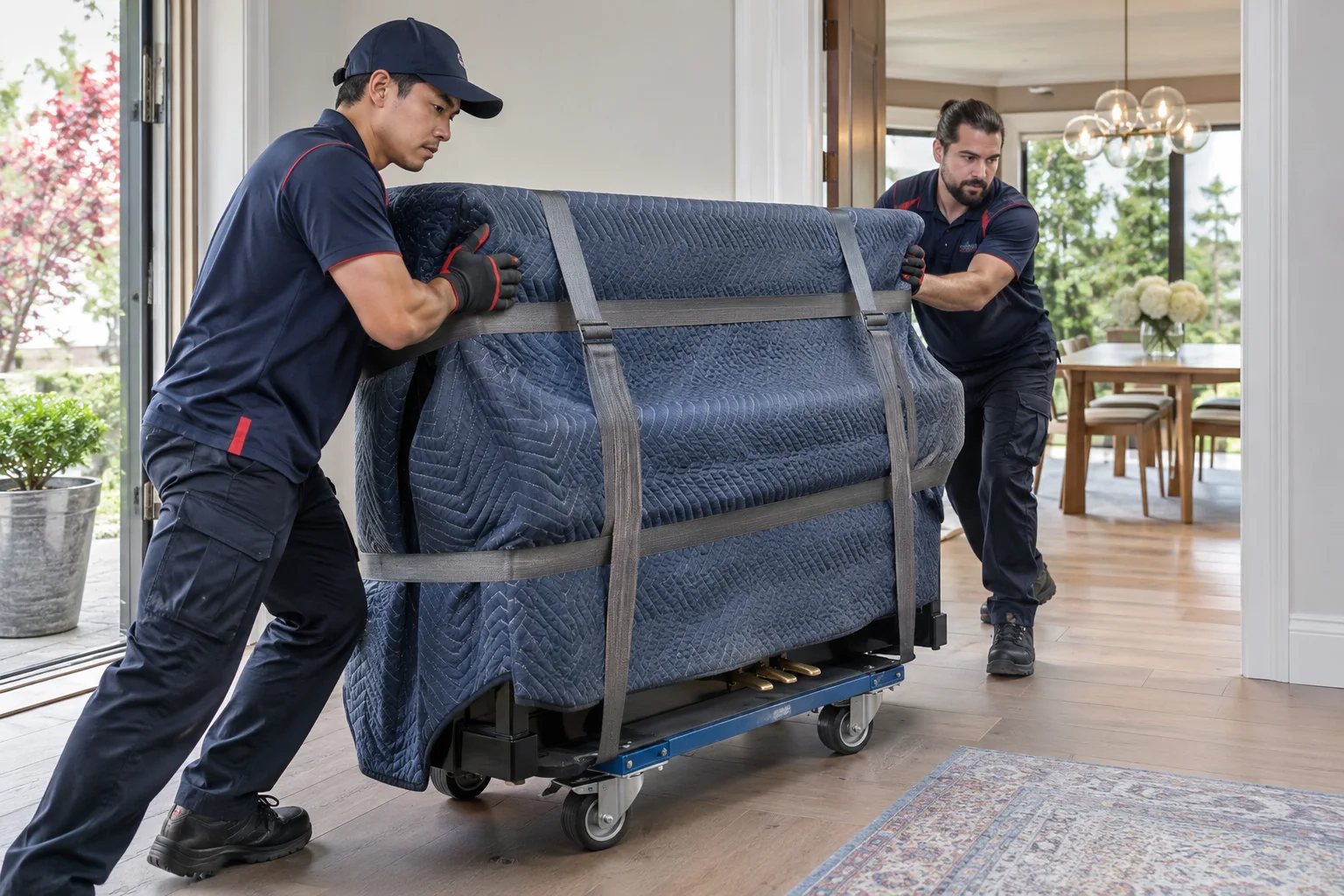
Identify the instrument accurately
Tell the provider what type of piano is moving and give the make or model if available. Supply photographs of the instrument and explain its general condition. Ask which measurements the assessor needs. A broad request to move a heavy item does not identify the preparation or equipment appropriate to a particular instrument and property.
An upright piano and a grand instrument may require different discussions. Let the company assess the actual piece rather than selecting a handling description from a generic weight category. Give the assessor enough information to distinguish your instrument from another piano of the same broad type. Photograph its whole outline and the area where it stands, then ask which additional views or dimensions are useful. Identify any concern about its condition that the handler should understand before preparation begins. The company should decide whether its available information supports a proposal or whether another assessment is needed. If you are not certain about a model or construction detail, describe what you know rather than supplying an assumed specification. Keep the instrument description with the access record so a separate handling team does not receive one without the other. A booking should identify the actual piano and the work assessed for it.
What further instrument information does the assessor need before confirming the service?
Inspect the full collection route
Describe every part of the route, including door openings, corners, changes in level and the external approach. Ask which dimensions and photographs are needed for uncertain points. Avoid treating one measured doorway as proof that the entire path is suitable. The company responsible for handling should assess how the instrument reaches the vehicle.
A piano may leave a room easily but encounter a tight turn at the next landing. Show the assessor the whole route instead of only the most obvious doorway. Follow the route beyond the first obvious opening. Show the assessor the space before and after a doorway, the direction of each turn and any place where the level changes. Include the approach outside and the proposed loading point. The person describing the property should not decide that a narrow section can be managed merely because an ordinary piece of furniture passed through it. Ask the responsible handler what information allows that section to be assessed. If a photograph hides an obstruction or makes the surrounding space difficult to judge, add an explanation. The resulting route record should help a team that has not visited understand where the uncertainty lies, without becoming an instruction from the household about a lifting technique.
Has the provider assessed every uncertain point between the instrument and the vehicle?
Assess the destination independently
Collect the receiving property’s access information with the same care used at pickup. Identify the planned room and position. If the route cannot be confirmed, tell the company before booking a final delivery method. A successful collection assessment does not establish that a different property can receive the instrument under the same arrangement.
The receiving room may be larger than the old room but reached through a narrower entrance. Obtain the relevant dimensions before assuming the placement can be completed. Obtain destination measurements before committing to the intended room. A receiving property can present an entirely different sequence of entrances and turns from the collection home. Tell the assessor whether the room is available and whether other furniture or work will affect the route. If someone else controls access, identify how the assessment information will be obtained from that person. Ask the company to explain what remains unresolved rather than interpreting a large room as evidence that its entrance is suitable. When the position changes after assessment, refer the revised route back to the provider. This keeps the delivery plan attached to the actual receiving space instead of asking the crew to extend an earlier assessment at the door.
What remains uncertain about reaching the intended destination position?
Ask who provides specialist handling
Find out who actually handles the instrument and whether a separate specialist is involved. Ask the company to explain the preparation and equipment included in its proposal. Keep technical handling decisions with the responsible provider. Your role is to describe the instrument and access accurately, not to prescribe a lifting method based on an unrelated previous move.
If the general household mover arranges another team for the piano, record how that team receives the assessment and who coordinates its appointment. Ask the booking company to identify the person or team responsible for assessing and handling the piano. If it uses another specialist, find out which business receives your instrument and access information and who confirms the appointment. The household needs to know whether a general moving crew is collecting the rest of the home while a separate team handles the piano, or whether one coordinated service covers both. Request a description of the included preparation and equipment arrangement, without trying to choose that equipment yourself. If the assessor needs further information, keep the booking conditional on that review where appropriate. Clear responsibility is especially useful when the person who prepared the estimate will not be the person leading the handling work.
Which business is responsible for the piano handling method and working crew?
Define preparation and finishing work
Ask which preparation, protection and finishing tasks the quoted service includes for the instrument. Identify any work assigned to another appropriate professional. Keep the handling agreement clear without assuming it includes every aspect of instrument care. A statement that the piano will be moved should lead to an explanation of the actual booked work.
A customer may expect the instrument to be ready for use immediately after placement. Ask the provider which finishing tasks are included and which questions need separate specialist advice. Ask the piano handler to describe the condition in which it expects to find the instrument and the condition in which its booked work leaves it. Identify any agreed preparation, protection, component handling and finishing tasks. Keep questions about the instrument's ongoing care with an appropriate professional rather than assuming the transport service answers them. If the household is asked to complete a task first, make sure the instruction is understood and that it is something the responsible person can actually arrange. Do not begin dismantling or altering the instrument merely to make the collection appear easier. A well-defined preparation boundary allows the specialist team to arrive for an assessed job and makes it possible to recognize whether the promised finishing work has been completed.
What will the piano-moving crew leave completed at the end of delivery?
Coordinate the instrument with other deliveries
Decide whether the piano travels with the household shipment or through a separate appointment. Tell each provider about the other work taking place. Confirm shared loading areas and building reservations. A specialist team should have the access it needs without encountering furniture, cartons or another vehicle blocking the assessed route.
A household crew may still be unloading when the piano team arrives. Agree on the appointment sequence so neither team has to improvise around the other’s work. Compare the piano appointment with the household team's access needs before both are booked. Identify any doorway, loading area or building reservation the two teams would share. Ask who coordinates their sequence and what should happen if one appointment moves. A separate specialist cannot use a route that is filled with household cartons or a loading point occupied by another vehicle. Likewise, a piano collection should not leave the household crew without the access arrangement its estimate assumed. Give each responsible contact the relevant confirmed times and explain which provider controls the instrument. The aim is a workable relationship between the appointments, with the household retaining one clear record instead of expecting teams that did not arrange each other's work to settle a conflict on arrival.
Which appointment takes priority if the teams need the same access route?
Compare the handling scope
Give each provider the same instrument description and access information. Ask how stairs, long carries, appointment changes and uncertain conditions are treated. Compare the written handling scope along with the amount. A lower total cannot be interpreted fairly when it assumes a different route or leaves a necessary preparation task outside the service.
One proposal may include an assessment visit while another awaits measurements. Keep that difference visible instead of treating both figures as confirmed descriptions of the same job. Give every piano-moving estimator the same instrument description, photographs and route information. Keep a separate note of any part that has not been assessed. Ask each company to identify the work it includes and the conditions on which its amount depends. A proposal based on a completed route assessment should be distinguished from an early figure awaiting measurements. If a provider describes a possible additional service, ask whether that work is included in the offer being compared. Retain the explanation beside the amount so another household member can understand the difference. The relevant decision involves the assessed piano, access, appointment and handling responsibility together; a total presented without those details does not explain how that provider intends to complete the job.
Are the proposals based on the same assessed route and included preparation?
Consider storage before collection
If the destination is not ready, explain the instrument and expected holding period to the mover and storage operator. Ask about the proposed environment and handling arrangement, and seek instrument-specific advice where appropriate. Record collection, storage handling, release and final placement as separate stages with clear responsibilities rather than treating storage as an unspecified pause.
A renovation may delay the receiving room. Arrange the holding and redelivery process before collection so the instrument is not left waiting for a destination decision. Discuss a storage need while the handler can still plan the whole sequence. Tell the mover and proposed storage operator which instrument is involved and when the destination may become usable. Ask about the offered environment, handling and access, and seek instrument-specific advice if suitability remains uncertain. Record who accepts the piano into holding, who retains its associated components and who authorizes the next collection. The final receiving route should be assessed before release rather than assumed to be unchanged after a lengthy gap. If the destination or room changes, send the updated information to the responsible handler. Storage should have an explained route into final placement, not simply a holding address that leaves the household to arrange another unassessed piano move later.
Who confirms the storage arrangement is suitable for the instrument’s needs?
Record condition and service concerns
Make an accessible photographic record before collection and identify existing concerns to the company. Read how the agreement handles damage reporting and responsibility. At delivery, describe any concern using a specific location or observation. Keep instrument-care questions distinct from a question about the transport work so each reaches an appropriate responsible person.
A surface mark noted after delivery and a question about ongoing tuning are different matters. Retain the condition record and seek the relevant explanation for each. Create condition records that someone can understand without having stood beside the instrument with you. Use clear views and identify the area of an existing concern. Keep the records accessible during collection and delivery, and tell the handler about a feature relevant to safe preparation. Read the agreement's reporting procedure before there is an urgent question. If you notice something after arrival, record the specific observation and ask which information the company needs to review it. A transport-related concern, a surface condition and an instrument-care question may require different expertise. Keeping those matters distinct helps you reach the appropriate person and prevents a broad statement about the piano from obscuring the particular fact that needs examination or explanation.
Which records identify the particular handling concern you need reviewed?
Keep the route clear for the agreed work
Before arrival, make the assessed path available and tell the company about any changed condition. Keep children, pets and unrelated work away from the route. Do not move the instrument with improvised help to save the crew time. If the destination position changes, obtain a revised assessment rather than asking the team to extend the work without review.
A newly installed cabinet or another delivery may narrow a previously measured path. Tell the provider about the change before it dispatches the piano crew. Review the assessed route again shortly before the appointment. A newly placed cabinet, another delivery or work inside the receiving room can change the available space. Tell the provider about any material difference before dispatch. Keep the route available for the agreed handling work and direct ordinary household activity elsewhere while the team uses it. The person supervising should know the intended position and the contact for a changed condition. Avoid moving the piano yourself to save time or asking the arriving team to try an alternative unassessed route. If the original plan no longer fits, the responsible handler needs an opportunity to reconsider the work. That is a practical service decision rather than a task for whoever happens to be helping at the property.
Does the current property still match the route that was assessed?