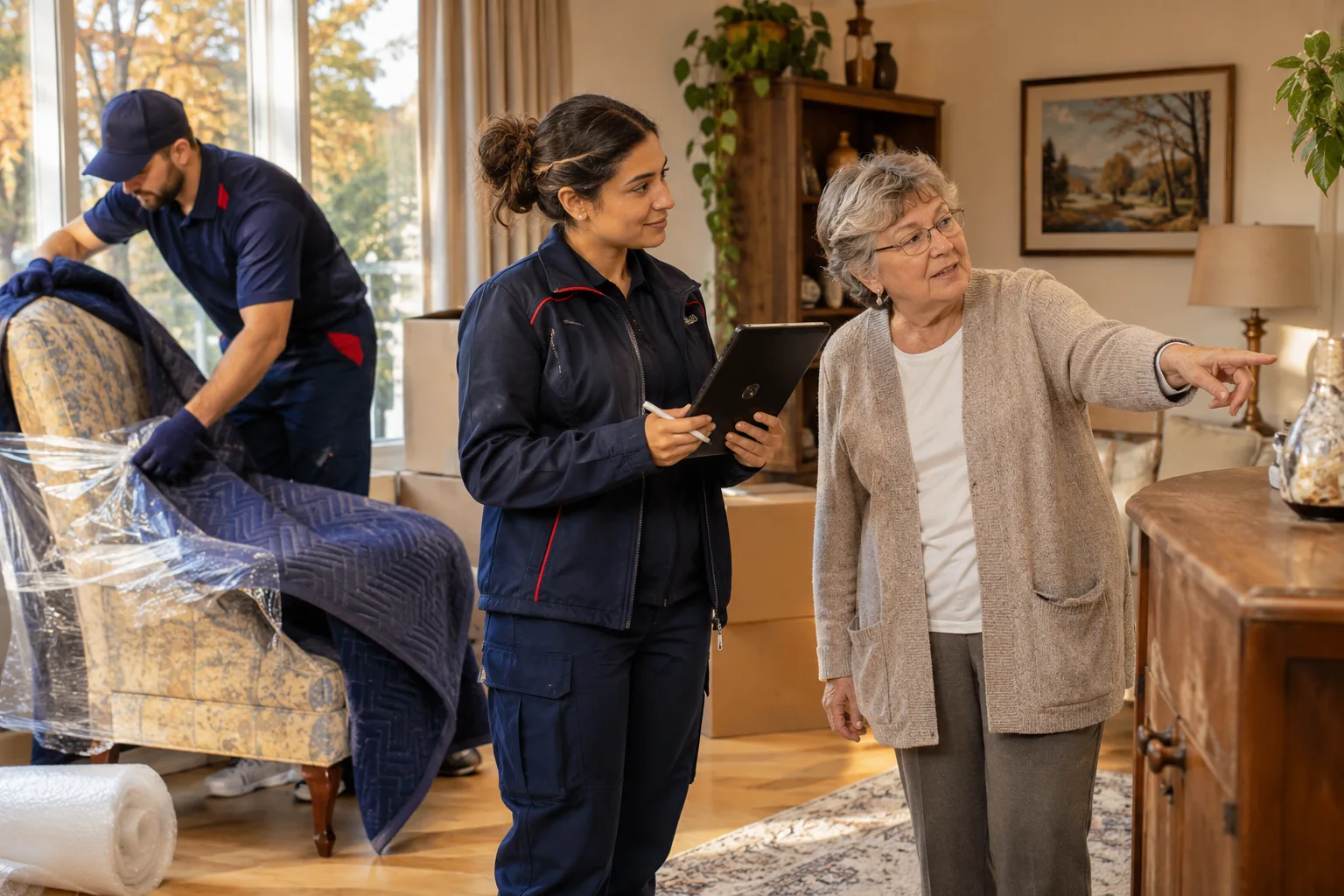
Keep the person moving at the centre
Ask the person moving which belongings, routines and rooms matter most to them. Identify the decisions they want to make and the tasks they want others to carry out. The moving service should implement those instructions rather than take ownership of personal choices. Give the mover a clear contact without removing the resident from decisions they wish to retain.
A resident may want to choose keepsakes personally while asking a relative to manage appointment calls. Those responsibilities can be divided without treating the relative as the owner of every decision. Make a short record of the decisions the resident wants to make personally before confirming the appointment. Discuss the resident's priorities before arranging the division of work. Identify which choices they want to make personally and which administrative tasks another person can manage. Explain that division to the mover so the team knows where to direct a question about belongings. A relative coordinating dates should not automatically become the decision-maker for keepsakes or furniture destinations. Clear roles allow practical help while preserving the resident's involvement and avoiding conflicting instructions that arise when helpers assume a broader authority than the person moving intended to give them.
Which decisions should remain directly with the person whose belongings are moving?
Give the resident a recognizable way to identify the belongings chosen for the new home. Depending on their preference, this may be a written list, labelled photographs or a room-by-room conversation recorded by a trusted helper. Confirm the decisions with them before passing the final instruction to the mover. The record should support their choices rather than become a reason to stop listening if they raise a concern. If a change affects the booked work, explain the practical implications and obtain an updated instruction. This keeps the resident involved while allowing helpers and the moving team to act from a clear, current arrangement.
Measure the destination before reducing belongings
Obtain the room dimensions and access information before deciding which large pieces travel. A familiar item may need a different position in the new home. Ask the mover to assess uncertain access and keep placement decisions on a simple plan. Downsizing is easier to coordinate when each retained piece has an intended destination rather than an unresolved place in a shipment.
Someone may wish to keep a favourite armchair and side table while replacing a larger seating arrangement. Confirm the intended space before sending the other furniture elsewhere. Consider what evidence would help if there is later uncertainty about the relationship between retained furniture and the receiving space. Compare the retained furniture with the actual receiving space before deciding that a piece can travel. Record the preferred position and ask the mover to assess uncertain access. If the destination plan changes, revisit the affected item rather than making the crew choose another location on delivery day. Measuring rooms is also a way to identify which decisions remain personal and which require a handling assessment. The household can then decide what to retain without confusing an emotional preference for a familiar item with confirmation that its route and placement are workable.
Where will each retained large piece be placed after delivery?
Separate the destinations of belongings
A senior move may divide belongings between a new home, storage and other people. Use separate lists and labels for those groups. Confirm which destinations the booked service covers and how additional stops are arranged. Avoid relying on a relative’s memory of conversations when several similar pieces or cartons are being distributed.
Two cabinets may look alike but have different destinations. Mark each one with the agreed destination identifier rather than assuming the loading team can distinguish family intentions. Build the plan for the instructions for goods going to different recipients around the people who will actually be there. Create separate, understandable groups for the destinations the resident has chosen. Use a label or item reference for each piece and keep a copy with the person supervising collection. Confirm which stops the provider has agreed to make. If another recipient collects belongings independently, coordinate that appointment without allowing the mover's shipment to become mixed with the other group. The resident and helpers should be able to identify what goes where without asking the crew to interpret family intentions, choose recipients or settle ownership questions during loading.
How will the crew identify each destination without deciding who should receive an item?
Allow a workable decision pace
Discuss the pace and scope of preparation honestly. If the resident needs more time to decide about a room, do not describe the whole property as ready for packing. Ask whether stages or separate appointments are possible for the service being considered. Distinguish time spent making personal choices from the packing and transport work being booked.
A resident may finish everyday clothing first but need additional time with photographs and papers. Keep that unresolved group out of an appointment described as ready-to-pack contents. Use the amount of sorting that must finish before packing begins as a separate decision in the booking discussion. Match the packing appointment to decisions the resident has actually completed. Tell the provider which rooms are ready and which groups still need personal attention. Ask whether the service can be staged or whether another preparation arrangement is more practical. Avoid treating time spent choosing keepsakes as an undefined part of a crew's packing work. A realistic pace keeps the resident from being rushed into decisions simply because a vehicle has arrived and allows the mover to assess a service based on belongings with confirmed destinations.
Which belongings are ready for the crew and which still need personal decisions?
Keep daily essentials available
Ask the person moving what they need to use throughout the transition. Keep their immediate clothing, documents, keys, communication devices and other personal essentials separate from crew-packed goods. Assign a responsible person to maintain that separation if needed. The resident should not have to search through the main shipment to continue an ordinary routine.
A small personally carried bag may be more useful than an unlabelled essential carton if the person needs its contents while travelling or before delivery is complete. Put the items needed before and after the main shipment into the written scope in practical language. Ask the resident to describe the ordinary activities they need to continue while the shipment moves. Use that conversation to prepare a personally accessible group of belongings, with help from a designated person if requested. Identify how the group travels and who retains it at each handover. Keep it distinct from cartons prepared for the crew. This arrangement should support the resident through travel and arrival rather than rely on retrieving one familiar item from a larger shipment after it has become difficult to access.
Who keeps the resident’s immediate belongings accessible through the handover?
Confirm destination receiving arrangements
Ask the destination contact about arrival hours, the unloading route and who can receive the goods. Explain the resident’s intended furniture plan and any room that must be ready first. Share confirmed instructions with the mover. A welcoming receiving arrangement still needs specific coordination so the crew can complete the booked work without guessing how the property operates.
A receiving contact may need to meet the truck or open a designated entrance. Confirm that person’s availability before relying on the proposed delivery window. Discuss the access and delivery conditions at the new residence using a concrete example from the property. Confirm the destination's receiving arrangements with the appropriate property contact. Identify who meets the vehicle, opens the required route and confirms the resident's room. Give that person the accepted furniture plan and the mover's arrival arrangement. If the resident will arrive at another time, decide who supervises placement on their behalf and which questions should wait for them. The household should not assume that a welcoming destination automatically supplies someone briefed to accept the shipment or approve changes to the agreed moving work.
Who will provide access and identify the intended room arrangement at delivery?
Choose practical unpacking support
Discuss what the resident needs completed on arrival. Ask whether the service includes opening selected cartons, furniture placement or other setup tasks. Be specific about the bed, everyday seating and the belongings used first. Avoid a broad promise to settle everything unless the provider has explained exactly which tasks and decisions the service covers.
A household might prioritize a clear sleeping area and familiar daily-use items, while leaving books and decorative objects for a later visit with family. Treat the work needed to make essential spaces usable as a handover between two people who may have different information. Choose a few specific arrival outcomes with the resident, then ask which tasks the provider can include. A usable sleeping area, agreed seating position and accessible daily belongings may matter more than opening every carton immediately. Identify the household decisions that remain for later visits. The unpacking or setup scope should describe a practical result without promising to settle the person's entire new home. This also helps relatives coordinate their help around work already booked rather than duplicating the crew's tasks or changing room positions before the resident can review them.
Which booked tasks make the essential living spaces usable after delivery?
Give relatives and helpers a shared instruction
Tell helpers which tasks are assigned to the mover and which remain with the household. Choose one current inventory and destination plan. If several relatives are involved, identify the person who resolves conflicting instructions. Good intentions can still create confusion when helpers remove cartons, change labels or request additional handling without updating the responsible contact.
A relative collecting donated items may arrive while movers prepare the new-home shipment. Keep the two groups physically identifiable and make their instructions available to both teams. Ask how the proposed service deals with the coordination of family assistance with the moving crew when the day runs differently from the estimate. Brief helpers from one current destination list and explain who resolves a disagreement. Distinguish the mover's work from donations, family collections and personal assistance. If a helper removes or relabels a carton, update the person coordinating the shipment. The crew should receive a final instruction rather than several competing preferences. A shared household plan is especially useful where people are helping at different times, because the person on site can identify what has already been decided without asking the resident to repeat or defend the same choice at every handover.
Who resolves a disagreement about an item’s destination before it is loaded?
Plan storage as a deliberate choice
If some belongings will enter storage, identify the operator, access arrangement and person responsible for later decisions. Ask about collection, handling and final retrieval as well as the holding period. Storage should not become an unexamined destination for everything still undecided. Keep an inventory that can be understood without opening every carton.
A resident may keep selected pieces while assessing the new room. Record those pieces separately so a later decision can be made without reconstructing the original household shipment. Compare the handling and retrieval of belongings kept for later decisions across the offers you receive. Identify the purpose of keeping each stored group and who will review it later. Ask the operator how access, retrieval and final delivery work before treating storage as a convenient destination for every unresolved item. Retain an inventory that the resident or chosen helper can understand. If the stored furniture is being kept while a room is assessed, give that decision an owner and a review point. The arrangement should preserve a manageable choice rather than leave the person moving with goods, charges and handling responsibilities that nobody has agreed to revisit.
Who will review the stored belongings and arrange their eventual destination?
Review the completed service with the resident
Ask the resident or their designated contact to review the completed tasks against the accepted scope. Identify specific concerns and retain the records needed for follow-up. Leave personal settling decisions with the person moving where they wish to make them. A service handover should explain what was completed and who handles an unresolved task.
If an important chair is in the wrong room, identify the placement instruction while the crew is present. A later sorting preference can be addressed through the household’s own plan. Think through the final handover of the agreed moving work from the crew’s perspective. Use the final service review to confirm the resident's agreed priorities and the tasks the provider was booked to complete. Ask the resident or designated contact about specific placement concerns while the team is still available. Record unfinished service work separately from personal choices about later sorting or decoration. Retain the accepted scope and follow-up contact in an accessible place. This leaves the moving appointment with a clear outcome while allowing the resident to continue settling in at their own pace and retain control over decisions that were never part of the crew's work.
Which agreed service tasks should be confirmed before the moving team leaves?